🌿 Agapanthe
🎨 Color Palette
About Agapanthe
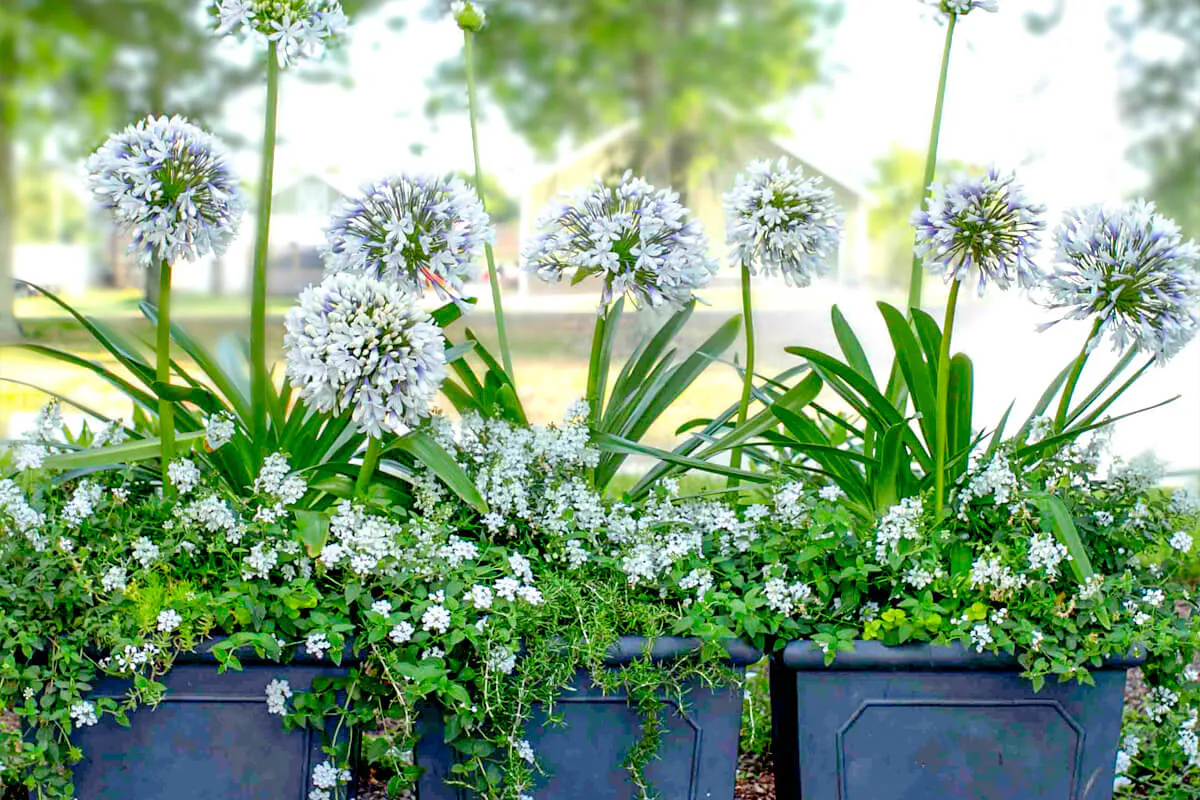
The African lily (Agapanthus africanus) is a clump-forming, herbaceous perennial native to the Cape region of South Africa, where it occurs on rocky slopes and coastal habitats. It is grown worldwide for its dense tufts of arching, strap-like leaves and its tall, leafless flowering stems that carry rounded umbels of many tubular, trumpet-shaped flowers, most often in shades of blue to violet, sometimes white. Flowering typically peaks in summer, and the nectar-rich blooms are attractive to pollinating insects. In cultivation, African lily is valued as a border plant, for mass planting, and as a striking container specimen, particularly in mild coastal climates. It performs best in full sun to light shade in well-drained soil and is relatively drought tolerant once established, though regular moisture during active growth supports better flowering. In colder regions it is grown as a pot plant and protected from hard frost, or treated as a summer bedding plant with winter shelter. Plants spread slowly by rhizomes and can be propagated reliably by division after flowering or in spring. Slugs and snails may damage young growth, and the sap can irritate skin in sensitive individuals.
🌱 Detailed Care Guide
📐 Growth & Structure
📅 Phenology
🌍 Ecology
✨ Usage & Benefits
- ornamental
- medicinal
⚠️ Safety & Traits
🌱 Propagation
🧪 Soil & Nutrition
🐛 Pests & Diseases
📝 Expert Advice
Grow Agapanthus in fertile, moisture-retentive but very well-drained soil; avoid winter waterlogging, which can rot fleshy rhizomes/crowns. Improve heavy clay by incorporating coarse grit/sharp sand and organic matter (compost) and consider planting on a slight mound or in raised beds for drainage. In containers, use a free-draining loam-based compost (e.g., John Innes No. 3) amended with ~20–30% grit/perlite, and ensure large drainage holes; keep the crown at soil level or slightly proud rather than deeply buried.
Agapanthus is most reliably increased by division rather than by seed. Division (recommended for named cultivars): - Divide congested clumps in spring as growth starts, or in early autumn in mild climates. - Lift the clump, separate into pieces with several shoots and a good portion of roots, and replant immediately. - Set crowns at the same depth as before; water in and keep evenly moist until established. From seed (best for species; seedlings may not come true to the parent): - Sow in spring (or late winter under cover) in seed trays or pots filled with a sterile, free‑draining seed compost. - Cover seed lightly with compost or grit (about the seed’s thickness) and firm gently. - Keep warm (about 18–21 °C), in bright light, and evenly moist but not waterlogged. - Germination can be slow and irregular; continue care for several weeks. - Prick out and pot on once seedlings are large enough to handle; grow on in a bright, frost‑free place for the first season. - Harden off and plant out after the last frost, spacing well and choosing a sunny, well‑drained position. - Expect flowering to take several years from seed.
Feed in spring as new growth starts with a balanced, slow‑release fertilizer (or well‑rotted compost). For plants in pots, or where soils are poor, supplement with a balanced liquid feed about every 2–4 weeks from spring until early summer to support flowering. Avoid high‑nitrogen fertilizers, which promote leafy growth at the expense of blooms; choose a balanced or slightly higher‑potash formulation if flower production is weak. Stop feeding by late summer so plants can harden off before winter (especially in colder climates).
Mulch after planting with organic matter (composted bark, leaf mould or compost) to conserve moisture and suppress weeds. Keep mulch a few centimetres back from the crown/base of the leaves to reduce the risk of rot, especially in poorly drained soils. In colder regions, after the first frosts apply a dry, insulating winter mulch (e.g., straw or bark) over the root zone to protect against freezing, then remove or pull back in spring as growth resumes.
Tall agapanthus flower stems can flop in wind or heavy rain, especially in exposed sites or rich, moist soils. Put supports in place early in the season before stems elongate: use thin bamboo canes around the clump with soft ties, or a discreet hoop/ring (peony-type) support to hold multiple stems together. Tie loosely at one or two points so stems can move without snapping, and avoid constricting the stems. In sheltered positions and with compact cultivars, staking is often unnecessary; planting in dense clumps also helps provide mutual support.
Agapanthus (African lily; often called “Agapanthe”) has a history of use in southern African traditional medicine, mainly using the rhizome/roots. Reported traditional uses include remedies for colds, coughs and other chest complaints, and as a pregnancy-related medicine (e.g., taken to influence labour or postpartum recovery). Phytochemical and pharmacological studies on Agapanthus extracts report antimicrobial and anti‑inflammatory activity in vitro, which may support some traditional respiratory/anti-infective uses; however, clinical evidence in humans is lacking. Plant sap and some preparations can be irritating or toxic if misused, so medicinal use should be approached with caution.
Deadhead by removing spent flower heads to prevent seed set and to keep plants tidy. After flowering, cut the entire flower stem (scape) back to the base without cutting into the crown. Remove only dead, yellowing, or damaged leaves as needed; avoid heavy cutting of healthy evergreen foliage. For deciduous types, once foliage has died back in autumn, cut leaves to a few centimetres above the crown. In cold/wet winter regions, leave evergreen foliage until spring where possible, then tidy, and protect crowns with a dry mulch after hard frosts.
📋 Additional Information
📖 View Complete Guide
For the full interactive experience with additional photos, personalized advice, and gardening tools:
Visit Aphylia →