🌿 Hyssop
About Hyssop
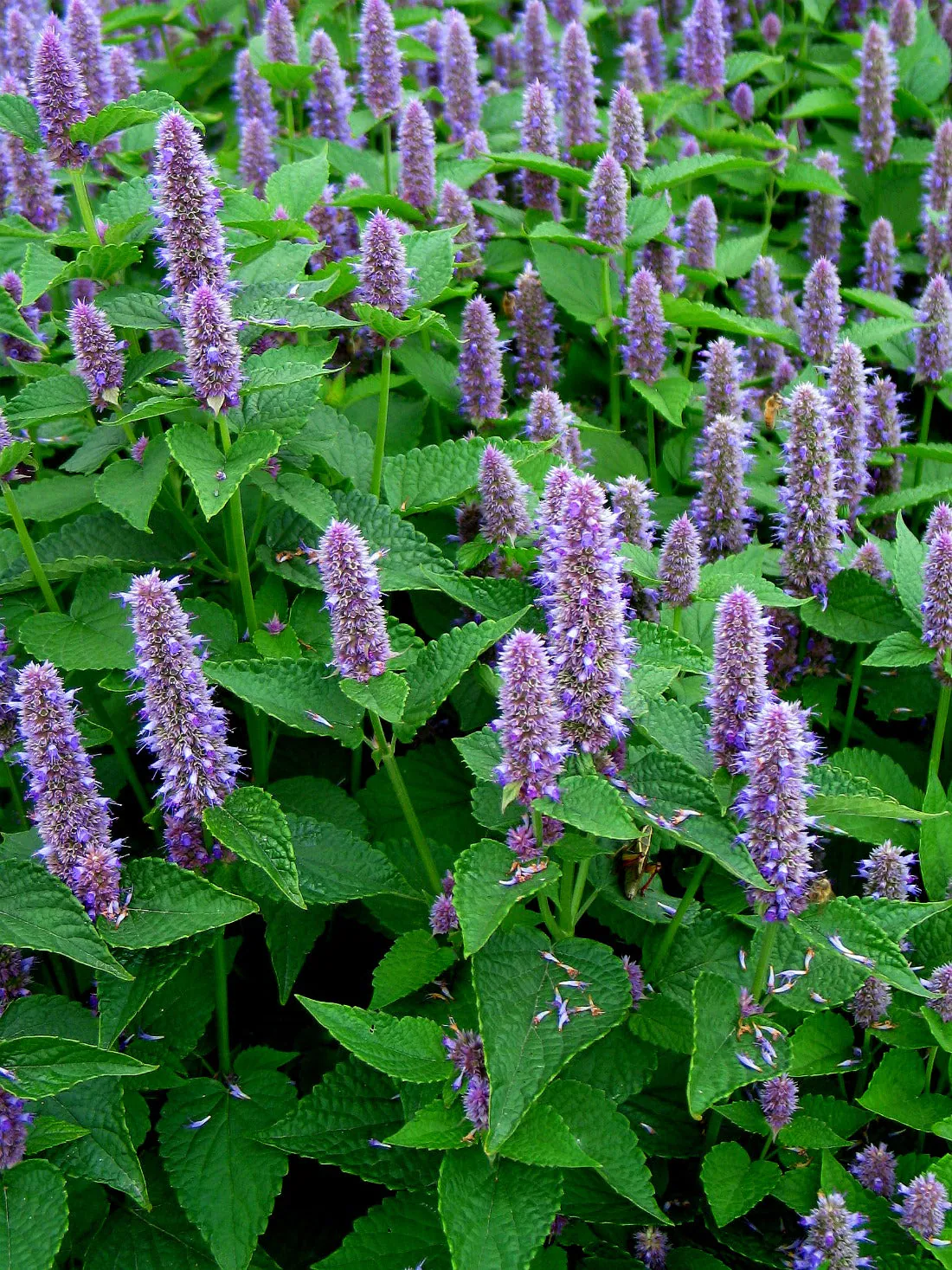
Hyssop (Hyssopus officinalis) is a woody-based, aromatic perennial herb in the mint family (Lamiaceae), grown for its ornamental flower spikes, fragrance, and traditional culinary and medicinal uses. It forms a compact, upright subshrub typically 30–60 cm tall with narrow, opposite, lance-shaped leaves that are rich in essential oils. In summer it produces dense, showy whorls of small, two-lipped flowers—most often blue to violet, but sometimes pink or white—held on terminal spikes. Hyssop is native to parts of southern Europe, the Mediterranean region, and western Asia, and it has long been cultivated and naturalized elsewhere. The plant prefers full sun and well-drained, moderately fertile soils, and it tolerates drought once established, making it well suited to herb gardens and dry borders. Regular trimming after flowering helps maintain a tidy form and encourages fresh growth; older plants can become woody and benefit from renewal by cuttings or division. Hyssop is attractive to pollinators, especially bees and butterflies, and is often used in nectar-rich plantings. The leaves and flowers have a strong, resinous-minty flavor and are used sparingly to season foods and herbal preparations; the essential oil is also used in fragrance applications, though concentrated products should be handled with care.
🌱 Detailed Care Guide
📐 Growth & Structure
📅 Phenology
🌍 Ecology
✨ Usage & Benefits
- edible
- ornamental
- aromatic
- fragrant
- medicinal
- spice
- infusion
- Edible parts: leaf, flower
⚠️ Safety & Traits
🌱 Propagation
🧪 Soil & Nutrition
🐛 Pests & Diseases
📝 Expert Advice
Grow hyssop in a light to medium, well‑drained soil; it thrives in dry, rocky or sandy loams and tolerates relatively poor ground. Best performance is on neutral to alkaline (often calcareous) soils. Avoid heavy clay and waterlogged conditions—improve drainage with grit/sand and organic matter as needed, but do not over‑enrich.
Sow hyssop (Hyssopus officinalis) from seed in spring, either indoors 6–8 weeks before the last frost or outdoors after the risk of frost has passed. Indoors: Sow on the surface of a fine, free-draining seed compost and cover very lightly (seed needs minimal covering). Keep evenly moist (not wet) at about 18–21°C; germination typically takes around 1–3 weeks. Prick out seedlings when large enough to handle and pot on. Harden off, then plant out after frosts. Outdoors: Direct-sow into a prepared, weed-free bed in full sun once soils warm. Sow thinly in shallow drills, cover lightly, and keep moist until established. Thin seedlings to avoid overcrowding. Planting position: Choose a sunny site with well-drained soil (hyssop dislikes winter waterlogging). Space plants about 30–45 cm apart and water in; once established, plants are relatively drought tolerant. Mulch lightly and avoid overly rich feeding, which can reduce aroma.
Hyssop (Hyssopus officinalis) is a light feeder and typically needs little to no fertilizer in garden soils. In spring, top-dress with a thin layer of finished compost or well-rotted manure; avoid heavy fertilization, especially high-nitrogen products, which can promote soft, leafy growth and reduce flowering and essential-oil quality. If soil is very poor, apply a light dose of a balanced, slow-release fertilizer (e.g., 5-5-5 or 10-10-10) once in early spring, and at most a second light feeding after the first major flush of bloom. For container plants, use a diluted balanced liquid fertilizer about once a month during active growth, stopping by late summer to avoid tender growth before winter.
Apply a thin, well-drained mulch to conserve moisture and suppress weeds without keeping the crown wet. In spring, use 2–5 cm (1–2 in) of compost, shredded bark, or leaf mold, keeping mulch a few centimeters away from the stems to prevent rot. In heavy soils or humid climates, consider a gravel or grit mulch around the plant to improve drainage and reduce fungal issues. Avoid thick, moisture-holding mulches and do not bury the base. In colder regions, a light winter mulch (straw or evergreen boughs) after the ground freezes can protect roots; remove or thin it in early spring.
Hyssop (Hyssopus officinalis) has a long history of traditional herbal use, mainly as a respiratory and digestive remedy. The flowering tops/leaves have been used as an expectorant to help loosen mucus and ease coughs and chest congestion associated with colds and mild bronchial complaints, and as a warming diaphoretic to promote sweating in febrile colds. It has also been used as a carminative/stomachic for indigestion, gas and abdominal cramping, and as a mild antispasmodic. Preparations have additionally been applied topically in traditional practice as an antiseptic/astringent for minor skin irritations. Safety note from authoritative herbal references: hyssop essential oil is rich in ketones (e.g., pinocamphone) and can be neurotoxic at higher doses; avoid medicinal doses of the essential oil, and use caution/avoidance in pregnancy, in children, and in people with seizure disorders.
Hyssop (Hyssopus officinalis) infusion is traditionally used as a warming, aromatic tea to support respiratory comfort (helping loosen mucus and ease coughs, colds, and sore throats) and to aid digestion (carminative effects that may reduce gas, bloating, and mild stomach cramps). It has also been used as a mild diaphoretic to promote perspiration during febrile illnesses and for general tonic support, though clinical evidence for these uses is limited.
Prune hyssop (Hyssopus officinalis) lightly and regularly to prevent it becoming woody. After the main flush of flowering, shear back the spent flower spikes and trim the plant by about 1/3 to encourage bushy regrowth. In early spring, tidy by removing winter-damaged, dead, or weak stems and lightly shaping, cutting back to healthy leafy growth. Avoid hard cutting into old, leafless wood, as it may not resprout well. In colder climates, delay major pruning until spring rather than autumn to reduce winter injury. Older, woody plants are often best renewed by taking cuttings and replacing every few years.
📋 Additional Information
📖 View Complete Guide
For the full interactive experience with additional photos, personalized advice, and gardening tools:
Visit Aphylia →