🌿 Licorice
About Licorice
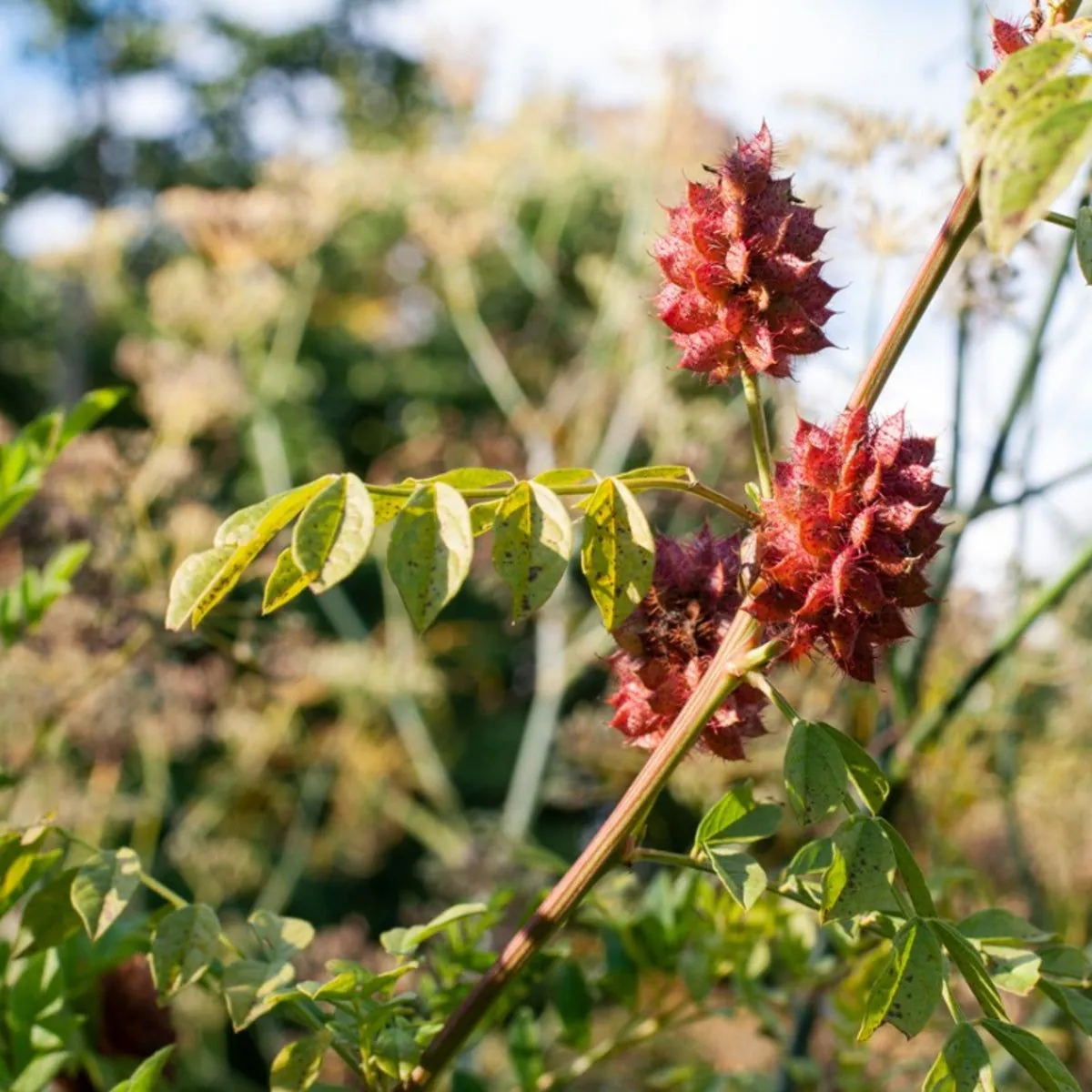
Licorice commonly refers to Glycyrrhiza glabra, a perennial legume (Fabaceae) valued for its sweet, aromatic roots. Native to parts of southern Europe and western Asia, it grows from a deep, spreading rhizome system and forms clumps of pinnate leaves with multiple oval leaflets. In summer it bears short spikes of pale violet to lavender pea-flowers, followed by flattened pods containing several seeds. The harvested roots and stolons contain glycyrrhizin, a triterpenoid saponin responsible for intense sweetness, along with flavonoids and other compounds that contribute to the plant’s characteristic flavor and traditional uses. Licorice root has a long history in herbal medicine and as a flavoring in confectionery, tobacco, and beverages; in pharmacognosy it is noted for demulcent properties and use in soothing irritated mucous membranes. The plant prefers full sun and well-drained soils and is typically propagated vegetatively because established crowns and rhizomes produce more uniform crops than seedlings. Roots are usually collected after several years of growth. Concentrated or excessive ingestion of glycyrrhizin can cause adverse effects such as hypertension and electrolyte imbalance, so medicinal use should be approached with caution.
🌱 Detailed Care Guide
📐 Growth & Structure
📅 Phenology
🌍 Ecology
✨ Usage & Benefits
- edible
- medicinal
- spice
- infusion
- Edible parts: root, rhizome
⚠️ Safety & Traits
🌱 Propagation
🧪 Soil & Nutrition
🐛 Pests & Diseases
📝 Expert Advice
Use a deep, fertile, well-drained loam or sandy loam that allows the long taproot and spreading rhizomes to develop. Incorporate organic matter for steady moisture retention, but avoid heavy, compacted soils and waterlogging (raised beds can help on clay). Prefers neutral to slightly alkaline conditions; lime acidic soils if needed. Keep evenly moist during establishment, then maintain moderate moisture without saturated substrate.
Licorice (Glycyrrhiza spp.) is most reliably established from root pieces, but it can be grown from seed with pre-treatment. From seed - When to sow: Start indoors in late winter to early spring, or sow outdoors after the last frost once soil has warmed. - Seed pre-treatment: Licorice seed has a hard coat. Lightly scarify (nick with a file/sandpaper) and/or soak in warm water for 12–24 hours; discard seeds that remain floating. - Sowing depth: Sow 0.5–1 cm deep in a free-draining seed compost. - Germination conditions: Keep evenly moist (not waterlogged) at about 20–25°C with good light. Germination is often irregular and may take ~2–4+ weeks. - Potting on: Move seedlings to individual pots when large enough to handle; grow on in bright light. - Planting out: Harden off and transplant after frost risk has passed. Site and planting - Position: Full sun (light shade tolerated). - Soil: Deep, fertile, well-drained soil is best; avoid waterlogged sites. A neutral to slightly alkaline soil is often preferred. - Spacing: Allow ample room for the spreading root system; typically 60–90 cm between plants. - Establishment: Water to settle plants and keep consistently moist during the first growing season; mulch to conserve moisture and suppress weeds. Alternative (often preferred): root cuttings/division - In spring (or autumn in mild climates), plant sections of healthy root/rhizome horizontally 5–10 cm deep, ensuring each piece has at least one bud; keep evenly moist until shoots emerge.
Licorice (Glycyrrhiza spp.) generally needs only moderate fertility. Before planting, incorporate well‑rotted compost or aged manure to improve soil structure; avoid heavy nitrogen inputs. In established plantings, apply a light spring top‑dressing of compost or a modest amount of a balanced, low‑nitrogen fertilizer (e.g., 5‑10‑10) once each year if growth is weak; otherwise fertilization is often unnecessary because licorice is a legume and can obtain nitrogen via root nodules. Avoid repeated high‑nitrogen feeding, which can promote lush foliage at the expense of root development. In containers, use a diluted balanced liquid fertilizer at low rates during active growth only (every 4–6 weeks), and stop feeding in late summer/autumn as growth slows.
Mulch with a 5–8 cm (2–3 in) layer of organic material (compost, leaf mold, well‑rotted manure, or straw) to conserve soil moisture and moderate soil temperature, especially during establishment. Keep mulch a few centimeters away from the crown/stems to reduce rot. Refresh mulch in spring; in colder regions, a light winter mulch can help protect the root zone, removing or thinning it in early spring as growth resumes.
Licorice root (Glycyrrhiza glabra) is traditionally used as a demulcent and anti-inflammatory for irritated mucous membranes, helping soothe sore throat, coughs/bronchitis (expectorant effect), and gastritis/dyspepsia. Preparations (including deglycyrrhizinated licorice, DGL) are used to support healing of peptic ulcers and reflux symptoms via mucosal protection and increased mucus secretion. Constituents (e.g., glycyrrhizin and flavonoids) show antioxidant and antimicrobial activity in laboratory studies. Caution: medicinal doses of glycyrrhizin-containing licorice can cause sodium retention, hypertension, edema, and hypokalemia; avoid/monitor in pregnancy and in people with cardiovascular, renal, or hepatic disease or when using diuretics, corticosteroids, or digoxin.
Licorice (Glycyrrhiza glabra) root infusion is traditionally used as a demulcent to soothe irritated mucous membranes, helping relieve sore throat, hoarseness, and cough by coating the throat and supporting expectoration. It is also used for digestive comfort (e.g., dyspepsia/heartburn) and to support gastric and intestinal mucosal defenses, with anti‑inflammatory activity attributed in part to glycyrrhizin and related constituents.
True licorice (Glycyrrhiza spp.) needs little pruning, but benefits from periodic cutback to keep growth tidy and to manage its spreading habit. - Timing: Cut back in late winter/early spring before new shoots emerge, or after dieback in autumn. - Method: Remove dead, weak, and damaged stems at the base. For general renewal, cut remaining stems back to near ground level (about 5–10 cm / 2–4 in) to encourage fresh shoots. - During the season: Pinch or shorten overly long shoots to prevent flopping and to keep plants within bounds. - Spread control: The plant spreads by rhizomes; prune by digging and removing unwanted rhizome runners at the perimeter (or grow in a contained bed/large pot). - Root harvest note: If growing for roots, avoid frequent hard cutbacks during the main growing season; harvest roots from mature plants (typically after several years) and then cut stems down after harvest.
📋 Additional Information
📖 View Complete Guide
For the full interactive experience with additional photos, personalized advice, and gardening tools:
Visit Aphylia →