🧗 ficus pumila
About ficus pumila
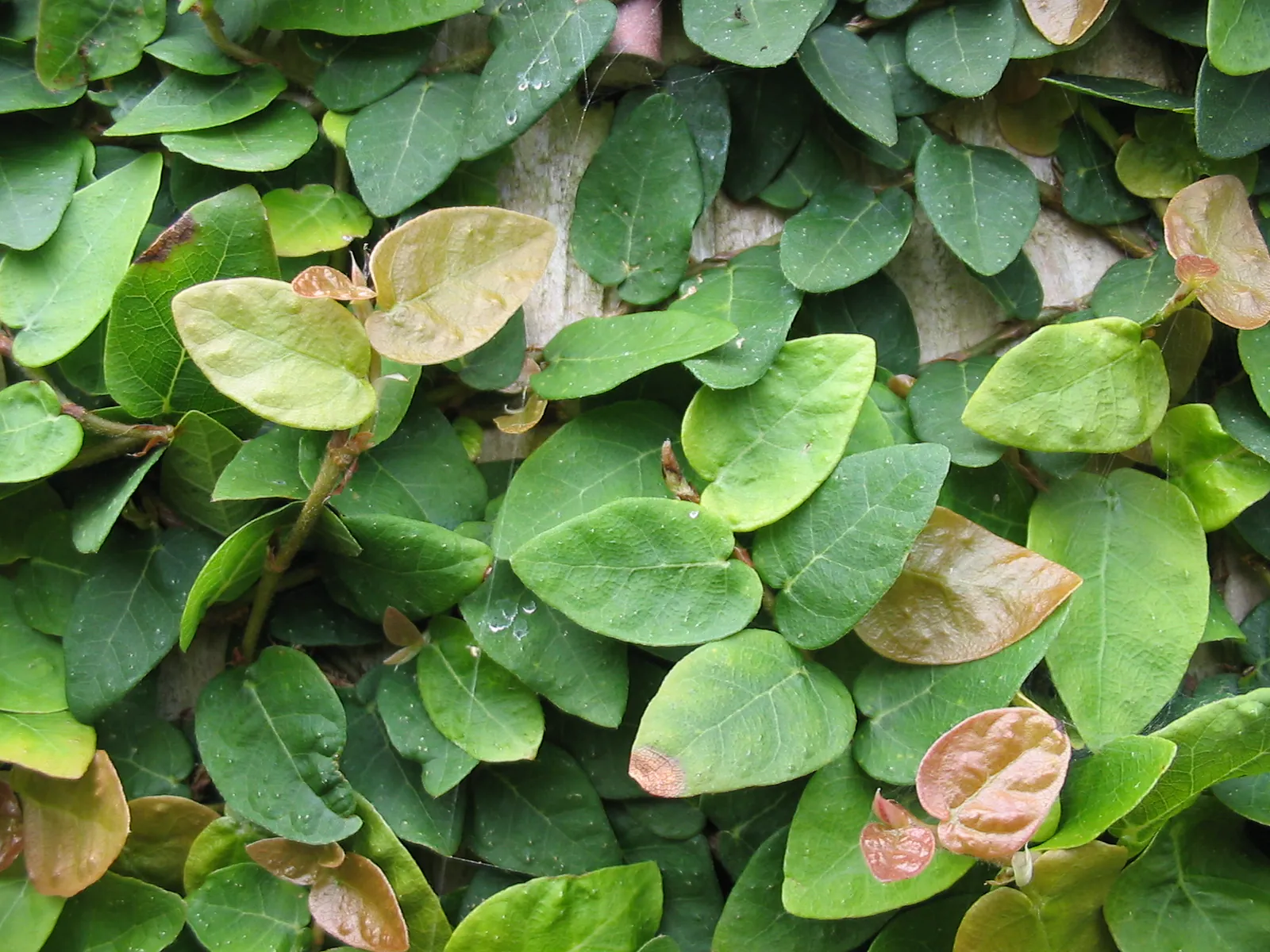
Creeping fig (Ficus pumila) is an evergreen, woody climbing fig in the mulberry family (Moraceae), valued for its ability to form a tight, self-attaching cover on walls, trunks, rocks, and the ground. Native to East Asia, it grows by producing small aerial rootlets that cling to rough surfaces, allowing the plant to spread rapidly and create dense mats of foliage. The species shows a marked difference between juvenile and mature growth: juvenile shoots carry small, closely set leaves and are responsible for most clinging, while older, free-growing shoots develop larger leaves and may bear the characteristic fig-type fruits (syconia), typically produced only when the plant has access to space and light. In landscapes, F. pumila is used as a groundcover or as a living façade in mild climates, where it tolerates shade better than many vines but also grows strongly in brighter exposures if moisture is adequate. It performs best in consistently moist, well-drained soils and benefits from regular pruning to keep it within bounds. Because its adhesive roots can penetrate crevices, it may damage weak mortar, painted surfaces, or wood, and it can become difficult to remove once established. Like other figs, it exudes a milky latex that can irritate skin. Indoors it is also grown as a houseplant, where humidity and even moisture encourage dense, trailing growth.
🌱 Detailed Care Guide
📐 Growth & Structure
📅 Phenology
🌍 Ecology
✨ Usage & Benefits
- ornamental
- Edible parts: fruit
⚠️ Safety & Traits
🌱 Propagation
🧪 Soil & Nutrition
🐛 Pests & Diseases
📝 Expert Advice
Plant in humus-rich, fertile soil that stays evenly moist but is free-draining (moist, well-drained). Improve garden soil with organic matter to boost moisture retention without waterlogging. In containers, use an airy, well-drained houseplant mix (peat-free) and ensure strong drainage; avoid compacted media and standing water. Adapts to a range of soil types (loam, sand, clay) and pH (acid, neutral, alkaline) provided drainage is good.
Ficus pumila is usually established from cuttings rather than seed, but seed can be sown when available. From seed (uncommon): - Use fresh, viable seed if possible. - Sow on the surface of a sterile, fine seed-starting mix (or lightly cover with a very thin layer of mix/vermiculite); keep evenly moist. - Provide warmth and humidity (about 22–27°C) and bright, indirect light; avoid direct sun on the tray. - Ventilate to reduce damping-off. Pot on carefully once seedlings are large enough to handle. Planting / potting on: - Pot into a free-draining but moisture-retentive medium (e.g., quality potting mix with added perlite/bark). Keep the root ball at the same depth as previously grown. - Place in bright shade to partial shade; protect from frost. Outdoors, plant only where winters are mild. - Water to settle in; keep consistently moist during establishment but avoid waterlogging. - Provide a surface or support to climb (wall, trellis, tree) if grown as a climber; if used as groundcover, space plants so runners can knit together (commonly about 30–60 cm apart, adjusted to desired coverage rate). - Best planting time is during warm, active growth periods (spring to early summer).
Fertilize only during active growth (spring through summer). For container plants, apply a balanced complete fertilizer (e.g., 10-10-10 or similar houseplant fertilizer) at 1/2 strength every 2–4 weeks, or use a controlled-release fertilizer at label rate in spring. Reduce or stop feeding in autumn and winter, especially under low light or cool conditions. Avoid overfertilizing (can cause soft, weak growth and salt buildup); flush the potting mix occasionally with plain water and always fertilize on moist soil. In-ground plants typically need little to no supplemental fertilizer if growing well—apply a light, balanced feed in spring only if growth is slow or foliage is pale.
Apply a 2–5 cm layer of organic mulch (e.g., composted bark, leaf mould, or well-rotted compost) around the root zone to conserve moisture, suppress weeds, and moderate soil temperature. Keep mulch a few centimetres away from stems/trunks to reduce rot and pest issues. Replenish as it breaks down, and reduce or pull back mulch during prolonged wet/cool periods to avoid waterlogging.
Provide a vertical support such as a trellis, wire grid, fence, or rough masonry wall. Ficus pumila climbs by aerial rootlets and will self-attach to textured surfaces; on smooth/painted render or timber it may need training ties and can cause damage, so use a freestanding trellis or wires set off the wall if protection is needed. Start stems at the base and loosely tie new shoots with soft garden ties, spacing ties 20–30 cm (8–12 in) apart, and redirect runners regularly to cover the support evenly. For container/indoor plants, use a moss pole or trellis and keep it slightly moist to encourage clinging roots. Remove or prune long runners to prevent tangling and to keep growth within bounds.
Prune regularly to control spread and keep a dense mat: pinch or trim soft shoots back to just above a node to encourage branching. For wall or fence growth, shear or cut back wayward runners and remove any stems straying into gutters, windows, or rooflines. Hard renovation pruning is tolerated (cut back to a framework or near the base) and is best done in spring to early summer when growth is active; avoid severe cuts during cold weather or extreme heat/drought. Remove dead, damaged, or crossing growth at any time. Wear gloves and eye protection because the milky latex sap can irritate skin; keep plants off vulnerable masonry or painted surfaces to prevent clinging rootlets from causing damage.
📋 Additional Information
🤝 Companion Plants
These plants grow well together:
📖 View Complete Guide
For the full interactive experience with additional photos, personalized advice, and gardening tools:
Visit Aphylia →