🌿 Labisia
🎨 Color Palette
About Labisia
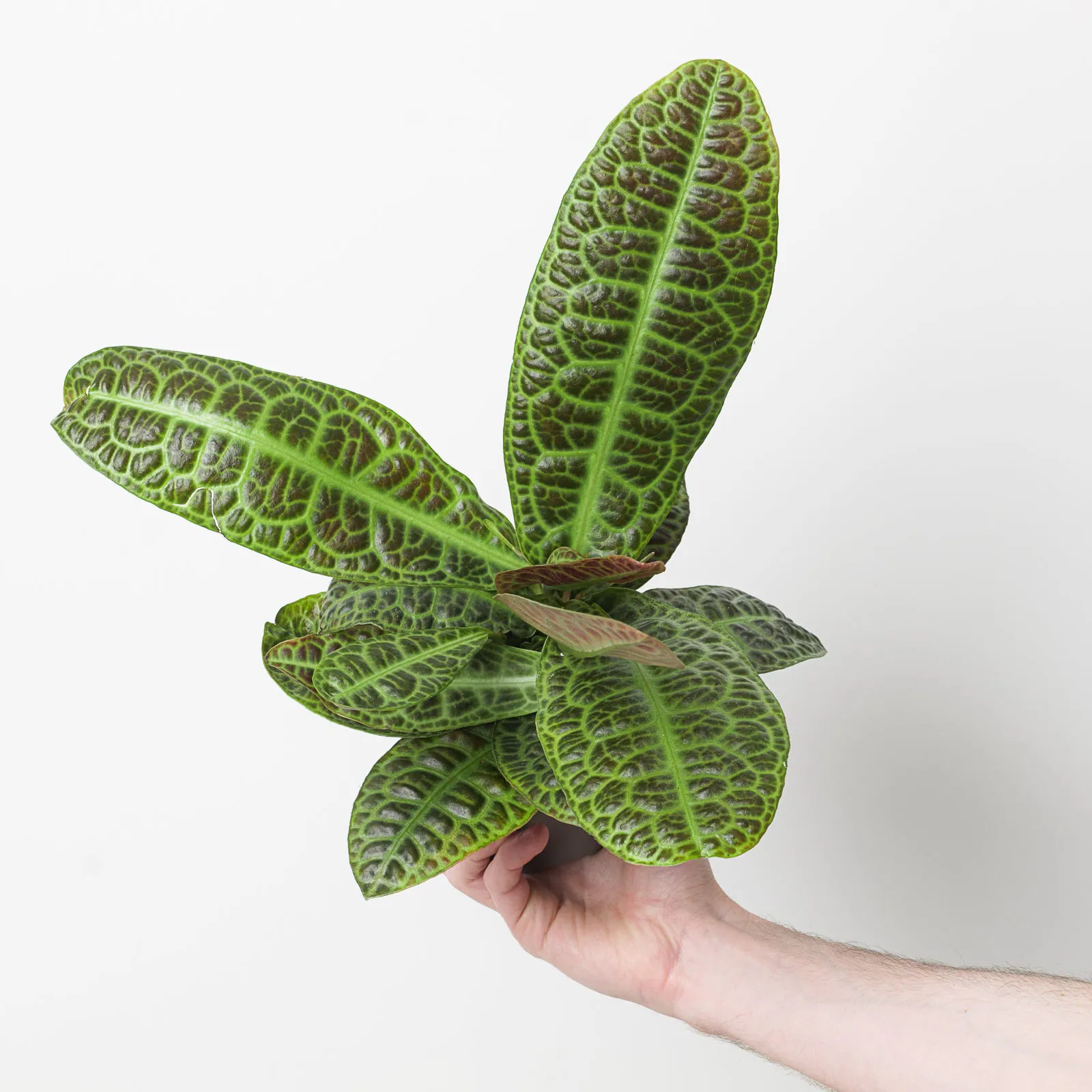
Labisia pumila is a small tropical evergreen herb native to Southeast Asia and grown for its ornamental foliage. The trade name "turtleback" is used for forms with strongly textured, bubbled leaves that are suitable for terrariums and shaded pots. It produces small, inconspicuous pale flowers followed by red berries in suitable conditions.
🌱 Detailed Care Guide
📐 Growth & Structure
📅 Phenology
🌍 Ecology
✨ Usage & Benefits
- ornamental
- medicinal
- infusion
- Edible parts: leaf, rhizome
⚠️ Safety & Traits
🌱 Propagation
🧪 Soil & Nutrition
🐛 Pests & Diseases
📝 Expert Advice
Use a loose, humus-rich, slightly acidic mix that remains evenly moist but drains quickly (e.g. a potting mix cut with peat moss/sphagnum and perlite, plus a little fine bark/coconut fiber). Avoid heavy, compact media; make sure the pot is well drained and don't let the roots sit in water.
Feed lightly during active growth: apply a dilute, balanced liquid fertilizer every 3-4 weeks (or a small dose of slow-release granulated fertilizer). Reduce or stop fertilization in winter/low light conditions; avoid over-fertilization, which can burn leaves and stress roots in small pots.
Minimum pruning. Remove damaged, diseased or yellowing leaves cleanly at the base; avoid cutting into the crown. For propagation/renewal, divide shoots or clumps when repotting and remove weak or rotten parts.
🤝 Companion Plants
These plants grow well together:
📖 View Complete Guide
For the full interactive experience with additional photos, personalized advice, and gardening tools:
Visit Aphylia →