🌵 Adenium
About Adenium
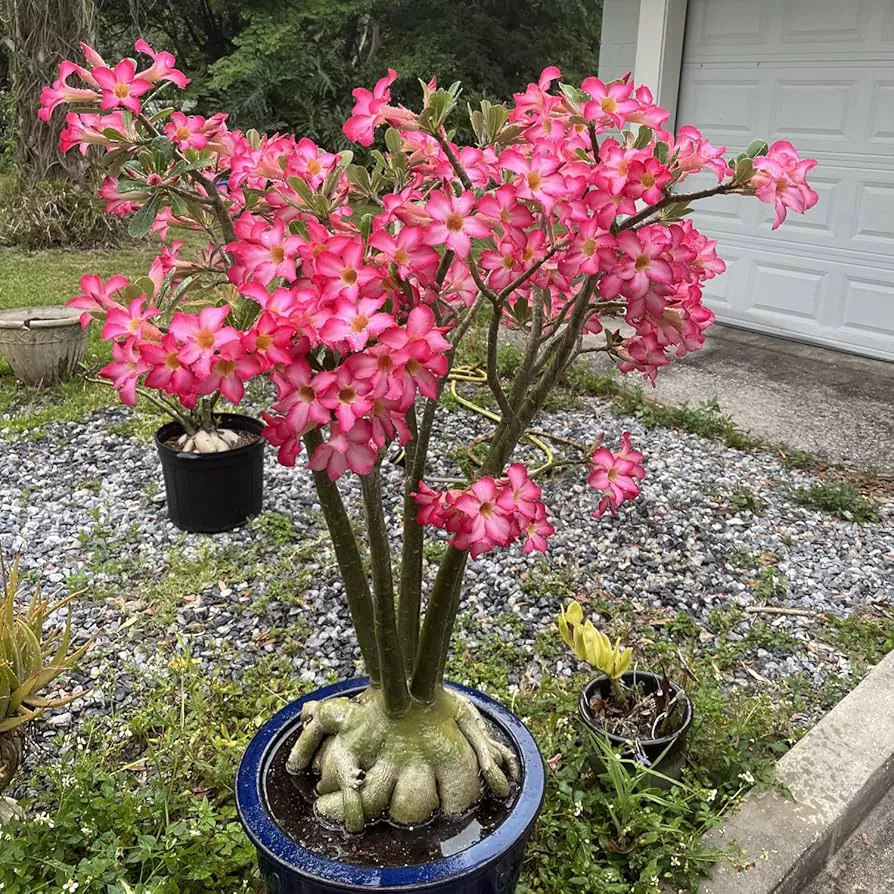
Adenium is a small genus of succulent shrubs and small trees in the dogbane family (Apocynaceae), native to arid and seasonally dry regions of sub-Saharan Africa and the Arabian Peninsula. Species such as Adenium obesum, widely known as desert rose, are notable for a swollen basal stem or caudex that stores water, supporting survival through drought. Plants typically have smooth gray bark and fleshy, spirally arranged leaves that may be shed during dry or cool periods. The sap is a white, milky latex characteristic of Apocynaceae and is toxic; in some regions it has been used traditionally as an arrow poison. Adenium is prized horticulturally for its showy, five-lobed, tubular flowers, often pink to red with paler throats, produced near stem tips and followed by paired, slender follicles containing tufted seeds adapted for wind dispersal. In cultivation the genus is grown as a warm-climate ornamental and as a caudiciform bonsai subject, requiring bright light, free-draining mineral-rich substrates, and careful watering to avoid rot. Growth and flowering are promoted by heat and sun, while cool temperatures and excess moisture can induce dormancy or disease.
🌱 Detailed Care Guide
📐 Growth & Structure
📅 Phenology
🌍 Ecology
✨ Usage & Benefits
- ornamental
- medicinal
⚠️ Safety & Traits
🌱 Propagation
🧪 Soil & Nutrition
🐛 Pests & Diseases
📝 Expert Advice
Use a very free‑draining, airy substrate; Adenium is intolerant of waterlogged soils. A cactus/succulent mix amended heavily with coarse mineral components (e.g., pumice, perlite, coarse sand/grit, crushed lava/expanded clay) is suitable; avoid dense peat- or compost-heavy mixes unless strongly lightened. In containers, use a fast-drying medium and pots with excellent drainage; allow the mix to dry substantially between waterings. Slightly acidic to neutral pH is generally acceptable.
Adenium (desert rose) is most reliably raised from fresh seed; germination rates drop quickly as seed ages. Seed sowing (preferred method) - Timing: Sow in warm conditions any time of year (or late spring/summer in temperate climates) when you can maintain high temperatures. - Substrate: Use a very free‑draining, low‑organic mix (e.g., cactus/succulent compost cut with coarse sand, pumice, perlite, or fine grit). Use clean containers with excellent drainage. - Pre‑treatment: Optional—soak seed briefly in clean, lukewarm water to rehydrate. Discard obviously damaged/moldy seed. - Sowing depth: Place seed on the surface and cover very lightly with a thin layer of grit/sand or mix (about the seed’s thickness). Do not bury deeply. - Temperature: Keep consistently warm (about 25–35 °C). Bottom heat can improve speed and uniformity. - Light: Bright light; avoid harsh, direct midday sun on covered trays. Light is beneficial but not strictly required if warmth is maintained. - Moisture: Keep the medium evenly moist but never waterlogged. High humidity (propagator cover/bag) helps early on, but provide ventilation to reduce damping‑off. - Germination: Often occurs within ~1–2 weeks under warm conditions; slower if cooler. After germination - Ventilation: Gradually increase airflow and remove covers once seedlings are established to prevent fungal problems. - Watering: Water when the surface begins to dry; avoid constant wetness. Adenium seedlings tolerate more regular moisture than adults but still need a fast‑draining medium. - Light/Hardening: Increase light progressively to full sun as plants grow; protect from cold. - Potting on: Transplant carefully once seedlings have several true leaves and a stable root system. Handle gently to avoid damaging the developing caudex and taproot. - Growing on: Use a gritty, well‑drained mix; feed lightly during active growth. Planting/culture notes - Temperature limits: Protect from frost; keep warm year‑round where possible. - Safety: Adenium exudes a milky latex that can be irritating/toxic; wear gloves when handling seedlings, pruning, or repotting and keep away from children and pets.
Fertilize only during active growth (typically spring through early autumn). Use a balanced, low-to-moderate nitrogen fertilizer (e.g., cactus/succulent feed or a balanced N–P–K), applied at half strength about every 2–4 weeks; alternatively use a controlled‑release fertilizer at label rate for containers. For better flowering, avoid high‑nitrogen products and consider a bloom formula with relatively higher potassium during the flowering period. Withhold or greatly reduce fertilizer in cool, low‑light months or when the plant is not actively growing (common winter rest) to prevent weak growth and root/crown problems. Apply to moist soil and occasionally flush the pot with plain water to limit salt buildup.
Adenium (e.g., Adenium obesum) has no well-established, evidence-based medicinal benefits for safe self-treatment; the plant’s latex and tissues contain potent cardiac glycosides and are considered poisonous. In some traditional/ethnomedicinal practices, preparations from the bark, roots or latex have been used (typically in very small, controlled amounts and/or topically) for conditions such as skin ailments, wounds, pain/inflammation, and certain infections; however, these uses carry significant risk of toxicity (including potentially fatal cardiac effects) and are not recommended without qualified medical oversight.
Prune Adenium (desert rose) primarily to control size and to increase branching and flowering. Time major pruning for late winter to early spring, just before or at the start of active growth in warm conditions; avoid heavy pruning during cool/dormant periods, as wounds heal slowly and rot risk increases. Technique: - Use sharp, sterilized pruners/knife; disinfect between cuts. - Remove dead, damaged, diseased, or crossing shoots back to healthy tissue. - To promote a fuller crown, shorten long stems by cutting just above a node/branch junction; pinching soft tip growth during the growing season also encourages branching. - When shaping, keep cuts clean and slightly angled so water does not sit on the wound. Aftercare and precautions: - Adenium exudes a milky latex sap that can irritate skin/eyes and is poisonous if ingested; wear gloves and keep away from children/pets. - Let cut surfaces dry and callus in a warm, airy place; keep the plant on the dry side immediately after pruning and resume watering gradually once growth restarts. - If humidity is high, a light dusting of sulfur or a fungicide on large cuts can reduce rot risk. Root/caudex work (optional, during repotting): - Root pruning and caudex exposure are best done during warm, active growth; remove only a portion of roots at a time, allow cuts to dry/callus, and plant into a fast-draining mix to prevent rot.
📋 Additional Information
📖 View Complete Guide
For the full interactive experience with additional photos, personalized advice, and gardening tools:
Visit Aphylia →