🌿 Papaver rhoeas
About Papaver rhoeas
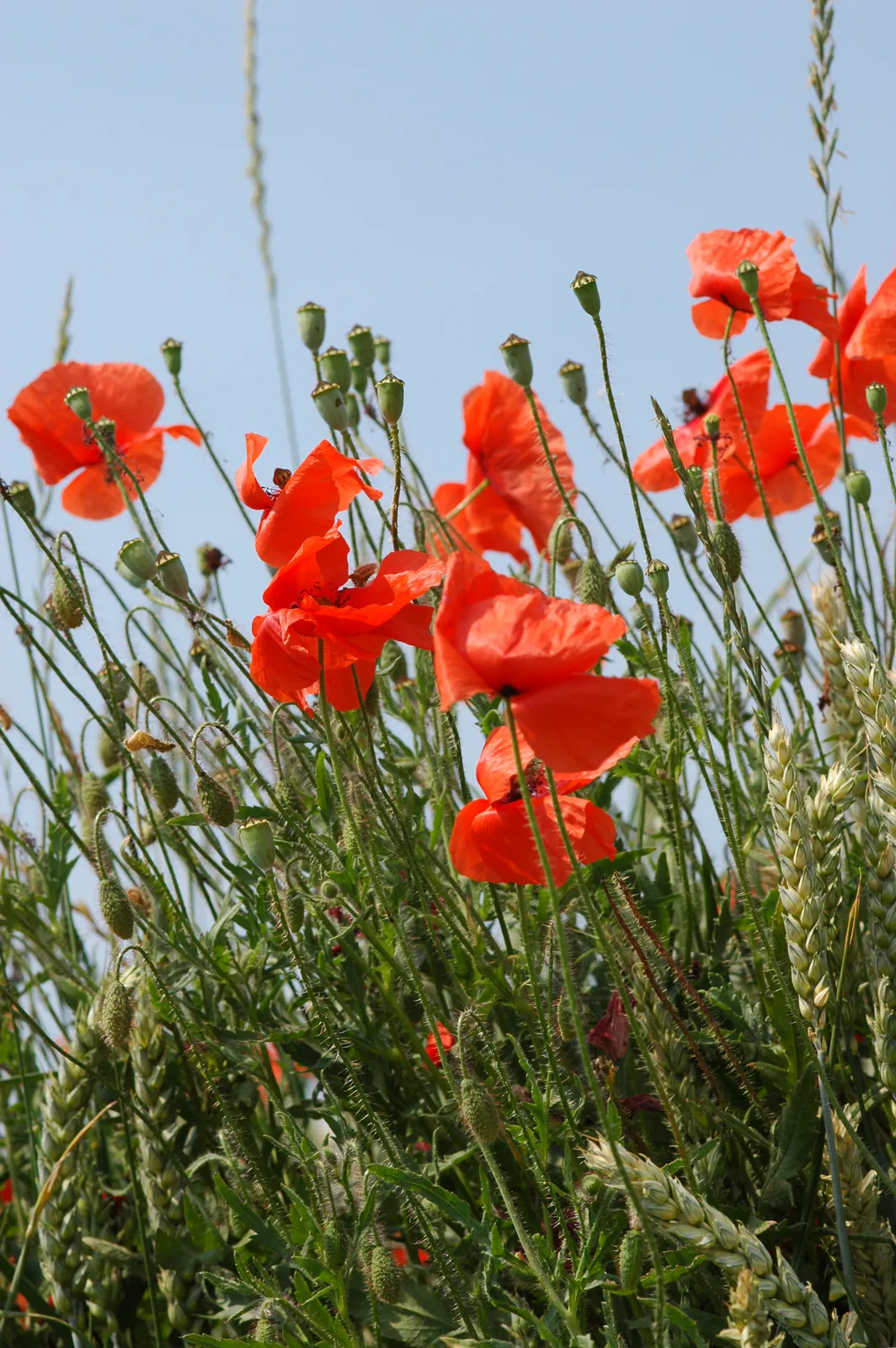
Papaver rhoeas, commonly known as the corn poppy, is a self-seeding annual wildflower in the poppy family (Papaveraceae). Native to Europe, western Asia, and North Africa, it has become naturalized in many temperate regions worldwide, often appearing in disturbed ground, arable fields, roadsides, and waste places. Plants typically form a basal rosette and develop slender, bristly stems bearing finely divided, hairy leaves. The flowers are produced in late spring to summer, usually with four crumpled, satiny petals in vivid scarlet to red-orange, often marked with a dark basal blotch, surrounding numerous blackish stamens. After flowering, a rounded capsule develops; when mature it releases abundant tiny seeds through pores beneath the cap-like stigma, enabling persistent soil seed banks and prolific colonization. Papaver rhoeas is an important nectar and pollen source for a range of insects, including bees and hoverflies, though it does not produce significant nectar in all conditions and is primarily valued for pollen. It has long cultural associations with remembrance and wartime landscapes, particularly in Europe. Unlike Papaver somniferum (the opium poppy), P. rhoeas is not a commercial source of opiates; its latex contains different alkaloids and the plant is chiefly grown ornamentally or valued as a component of wildflower mixes.
🌱 Detailed Care Guide
📐 Growth & Structure
📅 Phenology
🌍 Ecology
✨ Usage & Benefits
- edible
- ornamental
- medicinal
- infusion
- Edible parts: leaf, flower, seed
⚠️ Safety & Traits
🌱 Propagation
🧪 Soil & Nutrition
🐛 Pests & Diseases
📝 Expert Advice
Prefers a loose, airy, well‑drained soil (sandy or light loam). Performs best in moderately fertile to poor soils; overly rich substrates encourage lush growth with fewer flowers. Avoid heavy, compacted or waterlogged ground; improve drainage with grit/sand and organic matter if needed. Generally tolerant of a wide pH range, commonly thriving on neutral to alkaline soils (including calcareous/chalky sites).
Sow outdoors where plants are to flower, as Papaver rhoeas forms a taproot and generally resents transplanting. Timing: - Autumn (early–mid autumn) in mild climates for earlier flowering. - Spring (as soon as soil can be worked) in colder climates. Site and soil: - Full sun. - Well-drained soil; moderate to low fertility is suitable (avoid heavily manured/rich beds, which can encourage leafy growth and fewer flowers). How to sow: - Rake the surface to a fine tilth and remove weeds. - Broadcast thinly or sow in drills. - Do not bury deeply: scatter on the surface and lightly firm in, or cover with only a very thin dusting of fine soil/vermiculite because seeds need light to germinate. - Water gently to settle seed and keep the surface just moist until germination. Aftercare: - Germination is typically within 1–3 weeks in cool conditions. - Thin seedlings early to prevent overcrowding (aim for roughly 15–25 cm between plants, depending on desired effect). - Water during establishment; once established, water only in prolonged dry spells. - Deadheading can extend flowering; allow some seedheads to ripen if you want self-seeding for next year.
Papaver rhoeas (corn/common poppy) flowers best in lean, well‑drained soil and usually needs no fertilizer in the ground. If soil is very poor, work in a small amount of compost or a light dressing of a low‑nitrogen, balanced fertilizer before sowing; avoid high‑nitrogen feeds, which promote soft leafy growth and fewer flowers. Do not fertilize once buds form. For container-grown plants, use a dilute balanced liquid fertilizer (about 1/4–1/2 strength) once seedlings have several true leaves, then every 4–6 weeks until flowering; stop feeding during bloom.
Corn poppy (Papaver rhoeas) petals have been used in European traditional herbal medicine as a mild sedative and sleep aid, and as an antitussive/expectorant for soothing coughs and minor respiratory irritation (e.g., bronchitis, hoarseness). Preparations (infusions/syrups) are also described as mildly demulcent (soothing to mucous membranes). Activity is attributed mainly to non-opiate isoquinoline alkaloids (e.g., rhoeadine), giving gentle calming effects compared with opium poppy.
Infusions made from the dried petals (corn poppy) are traditionally used as a mild sedative and relaxant to promote sleep and ease nervous restlessness. They are also used for respiratory comfort as a soothing, demulcent tea to calm dry coughs and throat irritation, with gentle antitussive and antispasmodic effects attributed in part to mucilage and related constituents.
📋 Additional Information
📖 View Complete Guide
For the full interactive experience with additional photos, personalized advice, and gardening tools:
Visit Aphylia →