🌿 Crocus
🎨 Color Palette
About Crocus
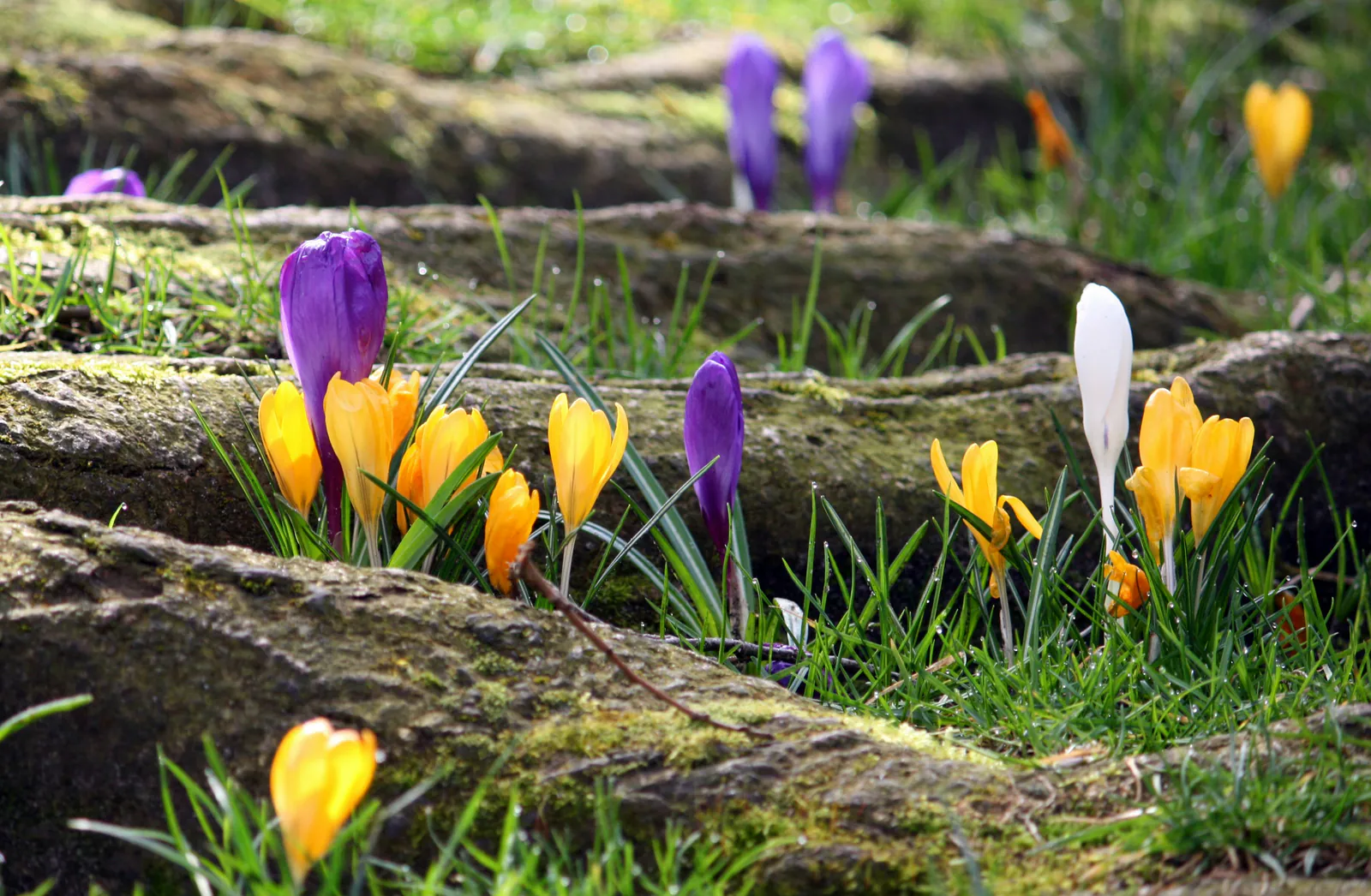
Crocus is a genus of small, corm-forming perennials in the iris family (Iridaceae), valued for their goblet- to cup-shaped flowers that open in sun and close in dull weather. Species are native chiefly to the Mediterranean region and western to central Asia, often occurring in open, well-drained habitats such as grasslands, rocky slopes, and woodland edges. Plants typically produce narrow, grass-like leaves, often with a paler central stripe, and flowers borne close to the ground in shades of purple, lilac, white, yellow, and bicolors depending on species and cultivar. Many crocuses flower very early in the year, with Crocus vernus and allied “large-flowered” garden crocuses widely grown for spring display; others bloom in autumn, including Crocus sativus, the cultivated source of saffron obtained from the dried stigmas. In gardens, crocuses are commonly naturalized in lawns, planted in borders and rock gardens, and grown in containers, where their compact habit and early flowering provide seasonal interest. They perform best in sun to light shade in freely draining soil and, like many bulbous plants, are prone to decline in heavy, waterlogged conditions.
🌱 Detailed Care Guide
📐 Growth & Structure
📅 Phenology
🌍 Ecology
✨ Usage & Benefits
- edible
- ornamental
- spice
- aromatic
- medicinal
- infusion
- fragrant
- Edible parts: flower
⚠️ Safety & Traits
🌱 Propagation
🧪 Soil & Nutrition
🐛 Pests & Diseases
📝 Expert Advice
Grow Crocus in very well-drained soil; waterlogging (especially in summer dormancy) readily rots corms. In heavy clay, improve drainage by incorporating coarse grit/sharp sand (and/or fine gravel) and planting on a slight slope or raised bed; avoid low spots where water collects. Most commonly grown crocus do well in neutral to slightly alkaline soils, though they are broadly adaptable provided drainage is excellent. During active growth (autumn–spring depending on species), soil can be moderately moist but never saturated; allow it to dry out as foliage dies back. In containers, use a free-draining bulb compost/loam-based mix with added grit and ensure ample drainage holes; keep pots on the dry side in dormancy.
Crocus are usually propagated by planting dormant corms (faster and more reliable than seed). Corm planting - Timing: plant when corms are dormant. Spring-flowering crocuses are typically planted in early autumn (about September–November in temperate climates). Autumn-flowering crocuses are planted in late summer to early autumn. - Site: full sun to light shade; choose a position that stays relatively dry in summer dormancy. Crocus require very free-draining soil; improve heavy soils with grit/sharp sand and organic matter, or plant in raised beds/containers. - Depth and spacing: plant pointed end up at about 5–10 cm deep (roughly 2–3× the corm height) and 7–10 cm apart. - Watering: water in after planting to settle soil, then avoid waterlogging, especially during dormancy, to reduce corm rot. - Containers: use a gritty, free-draining potting mix and ensure excellent drainage; keep pots moist during active growth, but not saturated. Division (offsets/cormlets) - When clumps become crowded or flowering declines, lift after the foliage has completely yellowed and died back (late spring to early summer for spring-flowering types). Separate and replant cormlets immediately, or dry and store them in a cool, dry, airy place and replant at the normal planting time. Seed sowing (slow) - Sow fresh, ripe seed as soon as available (often late spring to summer depending on species) in pots/trays of a free-draining seed mix; cover lightly with grit. - Keep outdoors in a cold frame or sheltered spot so seed experiences natural seasonal temperatures (cold/winter chilling helps germination in many crocuses). Keep evenly moist but never waterlogged. - Germination can be irregular and may take months; grow on seedlings in pots and allow foliage to die back naturally each year. Flowering from seed commonly takes several years.
Crocus generally needs only light feeding in reasonably fertile, well‑drained soil. At planting in autumn, incorporate a small amount of slow‑release, low‑nitrogen bulb fertilizer or bone meal into the planting area (keep it below/around the corm zone and avoid direct contact with the corms). In late winter to early spring as shoots emerge, top‑dress with a low‑nitrogen, higher‑phosphorus/potassium granular bulb fertilizer; water in if conditions are dry. In richer soils this spring feed can be reduced or omitted. Optionally, a second light feed immediately after flowering can help replenish the corm for next year, but stop feeding once foliage begins to yellow and die back. Avoid high‑nitrogen fertilizers (which favor soft leaf growth over flowers) and do not fertilize during summer dormancy.
Use a free‑draining mulch rather than a moisture‑holding one. A thin top‑dressing of fine gravel, grit, crushed slate, or similar mineral mulch helps keep blooms clean, reduces soil splash, and maintains sharp drainage around the corms (important to limit rot). In colder climates where freeze–thaw causes frost heave, apply only a light, airy winter mulch (e.g., straw or loose leaves) after the soil has frozen; pull it back or thin it as growth starts in late winter/early spring so shoots are not smothered. Avoid thick organic mulches (compost, bark, manure) directly over crocuses, especially in summer dormancy, because they can trap moisture and encourage corm decay. Keep mulch from piling against crowns and do not leave heavy mulch in place through warm, wet periods.
Medicinal activity is mainly associated with saffron, the dried stigmas of Crocus sativus. In traditional medicine it has been used as a mood-elevating and calming agent and for menstrual complaints. Modern clinical studies suggest saffron extracts may provide short-term improvement in mild to moderate depressive symptoms and may reduce symptoms of premenstrual syndrome; evidence quality varies and more robust trials are needed. Pharmacological research attributes potential benefits to antioxidant and anti-inflammatory constituents (e.g., crocins, crocetin, safranal), with preliminary clinical evidence explored for cognitive symptoms (e.g., Alzheimer’s disease) and certain eye conditions, but these uses are not well established. Note: ornamental Crocus species are not interchangeable with C. sativus for medicinal use, and ingestion of corms/plant parts may cause gastrointestinal adverse effects.
Only the dried red stigmas of saffron crocus (Crocus sativus) are used for infusions; most ornamental crocus species are not used as tea. A small pinch of saffron threads steeped in hot (not boiling) water, milk, or broth for ~5–15 minutes releases crocin/crocetins and related compounds, producing a strongly colored, aromatic infusion that is primarily used to flavor and color foods and beverages (e.g., rice, soups, desserts). In traditional and clinical contexts, saffron preparations have been studied for potential antioxidant activity and modest benefits for mood and premenstrual discomfort, but effects are dose-dependent and not a substitute for medical care. Use very small culinary amounts; avoid high-dose saffron teas/supplements, especially during pregnancy, and use caution if taking anticoagulants/antiplatelet drugs or medicines affecting mood. Do not confuse saffron crocus with autumn crocus (Colchicum), which is highly toxic.
📋 Additional Information
🤝 Companion Plants
These plants grow well together:
📖 View Complete Guide
For the full interactive experience with additional photos, personalized advice, and gardening tools:
Visit Aphylia →