🌿 Orchid
About Orchid
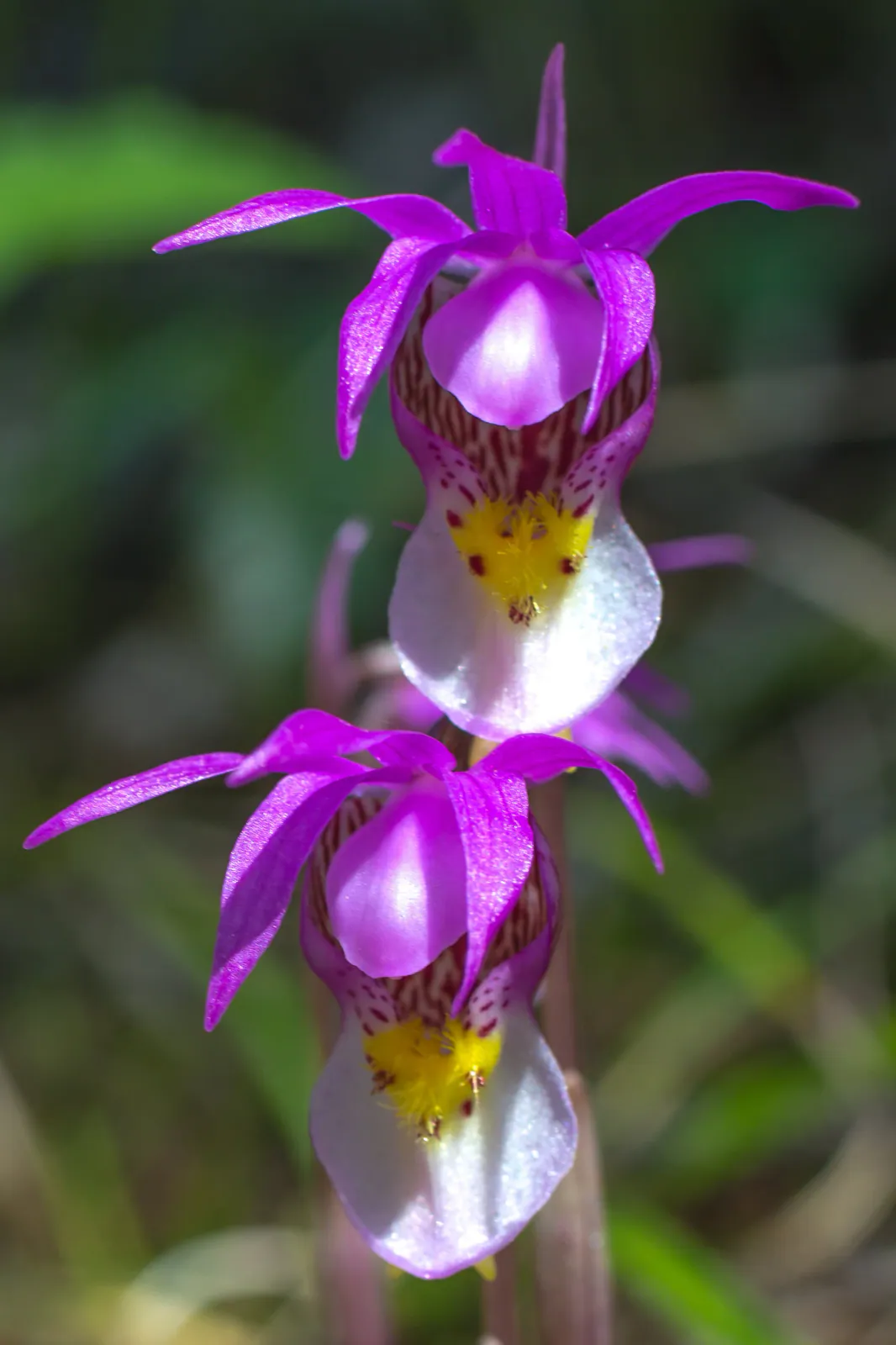
Calypso bulbosa, commonly known as calypso orchid or fairy slipper, is a diminutive terrestrial orchid of cool, shaded forests across boreal and montane regions of North America and northern Eurasia. It grows from a small corm and typically produces a single, round to elliptic basal leaf that persists through winter, followed in spring to early summer by a slender stem bearing one nodding, showy flower. The blossom is usually pink to purple with darker striping and a distinctive white to pale lip marked with yellow and reddish spots, features that help guide insect visitors. This species is closely tied to moist, humus-rich coniferous or mixed woodland soils, often in mossy sites with stable humidity and minimal disturbance. Like many orchids, it relies on mycorrhizal fungi for seed germination and early development, a dependence that contributes to its patchy distribution and sensitivity to habitat change. Calypso orchid is also noted for deceptive pollination: it offers little or no nectar reward, and pollination success can be sporadic. Populations may be vulnerable to trampling, collection, forestry impacts, and drying of forest floors, so it is often considered an indicator of intact, mature forest conditions. In cultivation it is notoriously difficult to maintain without replicating its cool, fungal-associated woodland environment.
🌱 Detailed Care Guide
📐 Growth & Structure
📅 Phenology
🌍 Ecology
✨ Usage & Benefits
- ornamental
⚠️ Safety & Traits
🌱 Propagation
🧪 Soil & Nutrition
🐛 Pests & Diseases
📝 Expert Advice
Prefers a cool, moist woodland substrate: a thin but continuously moist, well‑drained, acidic to slightly acidic soil rich in decomposed leaf litter/forest humus (often with moss/duff). Avoid heavy clay, waterlogging, compaction, and liming; keep fertility low (no strong fertilizers). In cultivation, success typically depends on an undisturbed, microbially active humus layer (mycorrhizal association) rather than standard potting mixes.
Calypso orchid (Calypso bulbosa) is not a practical garden plant to raise from seed: orchid seed is dust-like and normally requires sterile culture with an appropriate mycorrhizal fungus, so outdoor sowing is generally unsuccessful. Establish plants by planting nursery-propagated stock (or legally obtained dormant corms where available). Planting: set into a cool, shaded woodland position (bright shade), in humus-rich, acidic to neutral, sharply drained but consistently moist soil (leaf mould/peat-free ericaceous compost mixed with fine bark and grit). Plant corms/plants shallowly so the crown sits just below the surface; top-dress with leaf litter. Aftercare: keep evenly moist (never waterlogged), avoid high fertiliser/salts, and minimise disturbance; allow natural winter cold/dormancy and protect from summer heat and drying winds.
Avoid routine fertilization. Calypso (fairy slipper) is adapted to low-nutrient woodland soils and depends on mycorrhizal fungi; added fertilizer (especially high-salt, high-nitrogen products) can damage roots and disrupt the fungal association. If grown in a controlled container setting, use at most a very dilute, low-salt, balanced fertilizer (about 1/8–1/4 strength) only during active growth, apply sparingly, and flush with plain water periodically to prevent salt buildup. In garden/woodland settings, rely on natural fertility from leaf litter/forest duff rather than fertilizer.
Use a light, woodland-style mulch to mimic natural forest duff. Apply a thin layer (about 2–5 cm) of leaf mold, shredded deciduous leaves, or pine needles to keep the root zone cool and evenly moist; refresh annually in autumn. Keep mulch loose and pulled back from the crown/shoots to prevent rot, and avoid heavy bark chips, thick compost layers, or nutrient-rich mulches (manure/strong fertilizers), which can harm this orchid.
📋 Additional Information
📖 View Complete Guide
For the full interactive experience with additional photos, personalized advice, and gardening tools:
Visit Aphylia →