🌳 Albizia Julibrissin Rouge Selection
About Albizia Julibrissin Rouge Selection
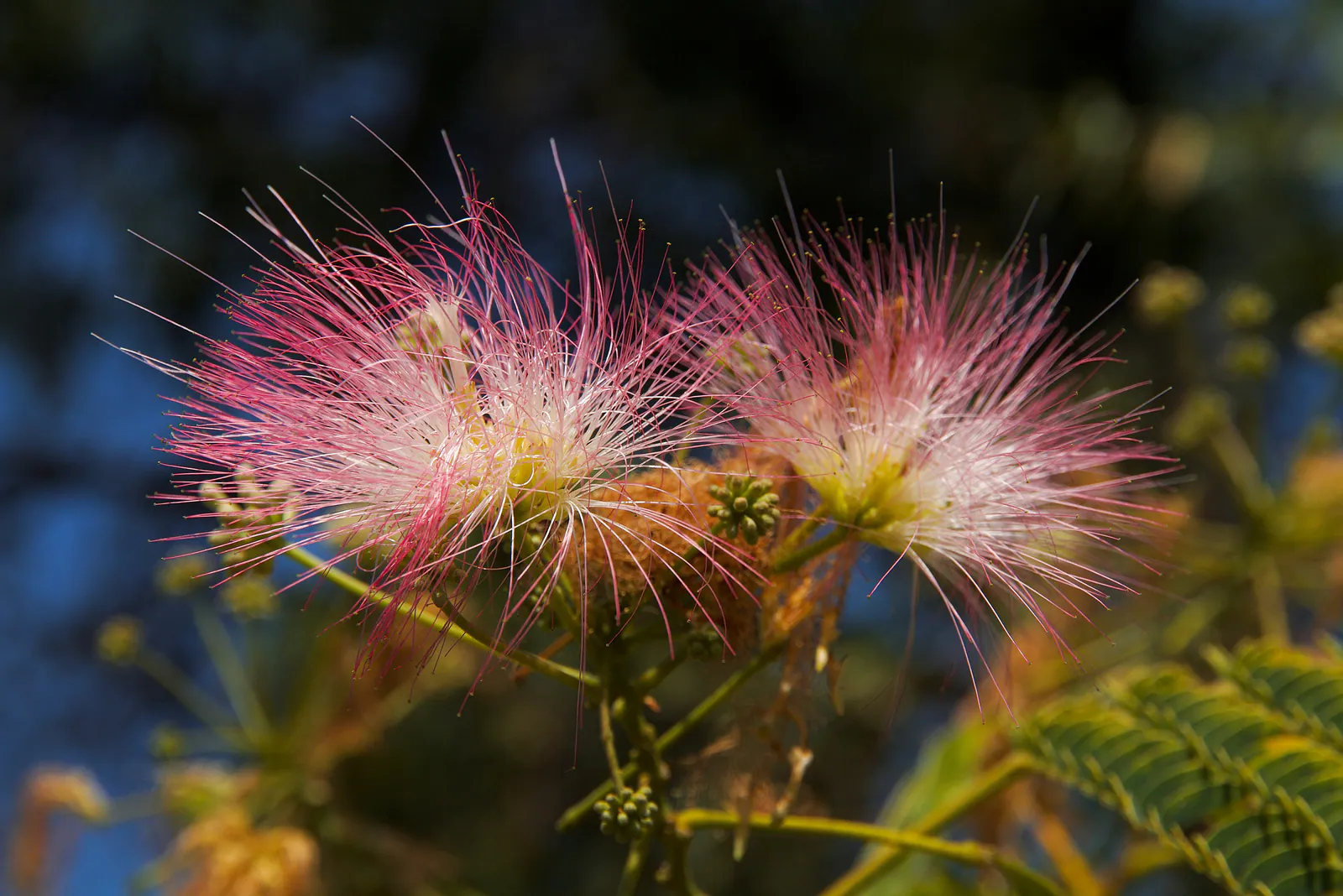
Albizia julibrissin, commonly known as the Persian silk tree or mimosa, is a small, fast-growing deciduous tree valued for its airy, fern-like, bipinnate foliage and showy summer bloom. It develops a broad, often flat-topped crown with smooth gray bark and leaves that give a light, dappled shade. In warm weather it produces fragrant, silky “powderpuff” flowers composed of numerous long stamens; the cultivar marketed as Rouge Selection is chosen for particularly rich, rosy-red flower color compared with the typical pink forms. After flowering, the tree forms flattened brown pods that may persist into winter. Native to a wide region of southwestern and eastern Asia, Albizia julibrissin is widely cultivated as an ornamental in temperate to warm-temperate climates and performs best in full sun and well-drained soil. Like many legumes it can tolerate lean soils once established, but growth and flowering improve with adequate moisture during the growing season. In suitable climates it can self-sow, and in parts of the world it is considered invasive; responsible garden use includes monitoring for seedlings and removing pods where appropriate. The species is generally tolerant of heat and urban conditions but may be affected by vascular wilt and other stress-related problems in unfavorable sites.
🌱 Detailed Care Guide
📐 Growth & Structure
📅 Phenology
🌍 Ecology
✨ Usage & Benefits
- ornamental
- fragrant
- Edible parts: flower
⚠️ Safety & Traits
🌱 Propagation
🧪 Soil & Nutrition
🐛 Pests & Diseases
📝 Expert Advice
Grow in well-drained soil; loam or sandy loam is ideal. It tolerates poor, dry, and sandy soils once established, but performs best in moderately fertile, airy substrates. Avoid waterlogged conditions and heavy, poorly drained clay; improve drainage and structure with organic matter if needed. Soil pH is generally adaptable.
Note: ‘Rouge Selection’ is a named selection of Albizia julibrissin and will not reliably come true from seed. For plants identical to the selection, use vegetative propagation (e.g., semi‑ripe cuttings in summer or grafting onto Albizia julibrissin rootstock) rather than sowing. Seed sowing (for the species/rootstocks): 1) Timing: Sow in spring (late winter to spring under cover) so plants have a full season to grow before winter. 2) Seed preparation (hard seed coat): Scarify to speed germination. Pour hot water (not boiling; approx. 70–80°C) over the seed, allow to cool, then soak 12–24 hours; discard any seeds that do not swell after repeating once. 3) Sowing: Sow 0.5–1 cm deep in a free‑draining seed compost; keep evenly moist but not waterlogged. 4) Temperature/light: Germinate warm (about 20–25°C) in bright light; germination is typically within a few weeks when pre‑treated. 5) Pricking out/potting on: Pot up seedlings once large enough to handle; grow on in a bright, frost‑free place, gradually harden off. 6) Planting out: Transplant after the last frost into full sun and well‑drained soil; water regularly during the first growing season. In colder regions, protect young plants their first winter or overwinter in a cold greenhouse/cold frame.
Albizia julibrissin generally needs little to no fertilizer in the landscape. On reasonably fertile soils, rely on an annual top-dressing of compost and a 5–8 cm (2–3 in) organic mulch in spring. If growth is weak or soil is very poor, apply a light dose of a balanced, slow‑release fertilizer (e.g., around 10‑10‑10 or similar) in early spring as new growth begins, following label rates; avoid heavy feeding and high‑nitrogen programs, which can promote soft, weak shoots and reduce flowering. Do not fertilize late in the season (late summer/fall), as this can stimulate tender growth before winter. Container-grown plants may need a controlled‑release fertilizer in spring or a dilute balanced liquid feed during active growth, but stop feeding as growth slows.
Apply a 5–8 cm (2–3 in) layer of organic mulch (e.g., composted bark, leaf mould, well-rotted compost) over the root zone to conserve moisture and suppress weeds, especially while plants are establishing. Keep mulch pulled back 5–10 cm (2–4 in) from the trunk/stem to prevent rot and pest issues. Refresh annually in spring or early summer; avoid piling on thick, wet mulch in poorly drained soils.
Prune sparingly; Albizia julibrissin flowers on current season’s growth and generally needs only light shaping. In late winter to early spring (after the risk of severe frost), remove dead, damaged, or diseased wood, thin out crossing/rubbing branches, and lightly shorten overly long shoots to maintain a balanced, airy canopy. Avoid heavy pruning in autumn or early winter, which can encourage tender growth that is frost-damaged. Remove basal suckers and any shoots arising from below the graft (if grafted) as they appear. Where size reduction or renovation is necessary, it tolerates hard cut-back (coppicing/pollarding) in early spring, but this will delay or reduce flowering for that season and should not be done routinely.
📋 Additional Information
📖 View Complete Guide
For the full interactive experience with additional photos, personalized advice, and gardening tools:
Visit Aphylia →