🧗 Pickle
About Pickle
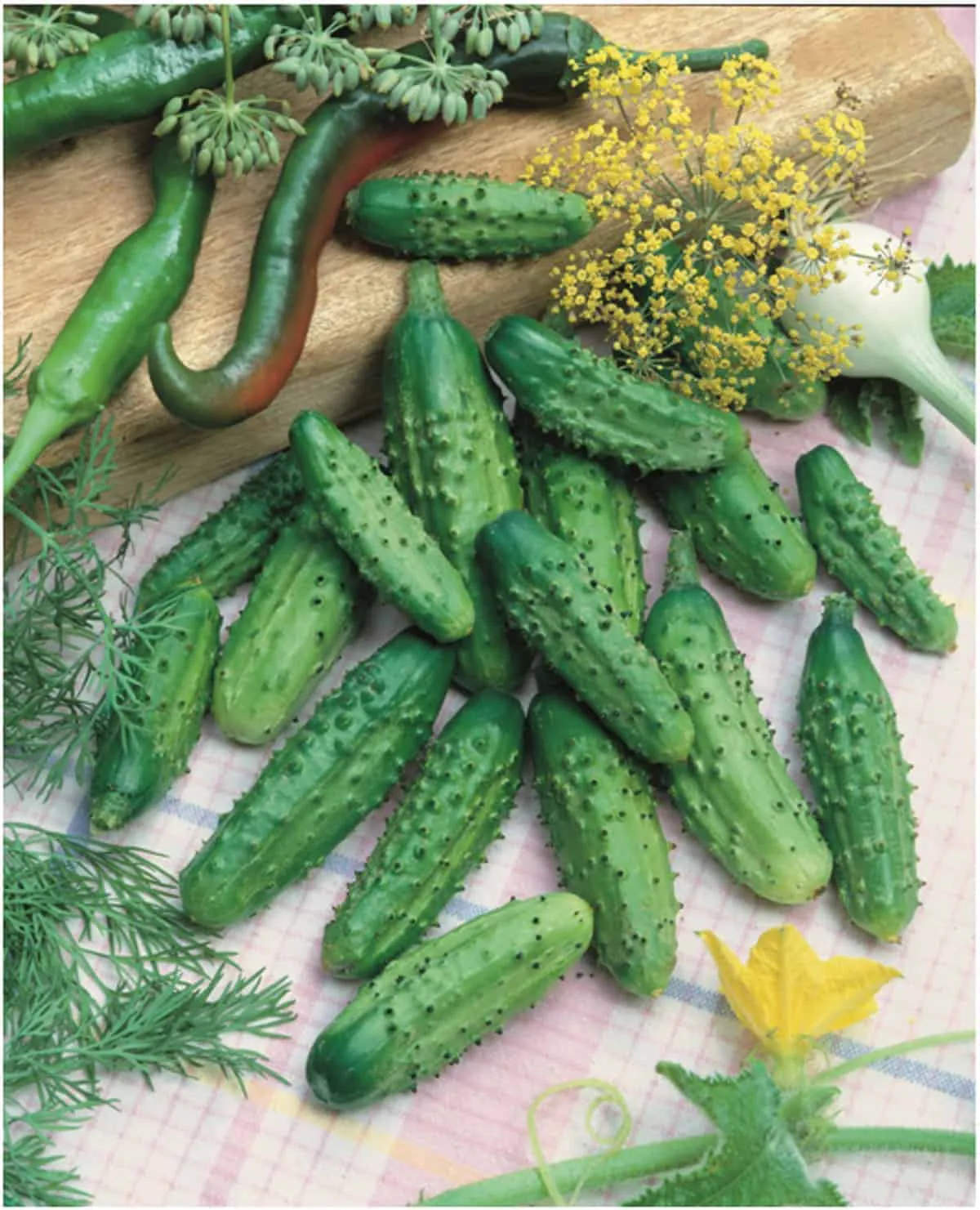
Small Green Parisian Pickle is a pickling-type cucumber (Cucumis sativus) selected for producing very small, firm fruits suited to classic French cornichons. Like other cucumbers in the gourd family (Cucurbitaceae), it is a tender, warm-season annual vine with trailing or climbing stems, rough, palmately lobed leaves, and yellow, insect-pollinated flowers. Plants are typically monoecious, bearing separate male and female flowers on the same plant; adequate pollinator activity supports good fruit set. This cultivar is grown specifically for harvesting the fruits young, when they are short, green, and crisp, often with a lightly bumpy or spined surface typical of many gherkin types. Picked at this immature stage, the fruits have a dense texture that holds up well to brining and vinegar pickling, and the small size is convenient for whole-fruit preserves. Small Green Parisian Pickle performs best in full sun and fertile, well-drained soil with steady moisture, as water stress can reduce yield and increase bitterness in cucumbers. Because cucumbers are sensitive to cold, sowing or transplanting is timed for after frost, once the soil has warmed. Training vines onto a support can improve air flow and fruit quality, while frequent harvesting encourages continued production.
🌱 Detailed Care Guide
📐 Growth & Structure
📅 Phenology
🌍 Ecology
✨ Usage & Benefits
- edible
- Edible parts: fruit
⚠️ Safety & Traits
🌱 Propagation
🧪 Soil & Nutrition
🐛 Pests & Diseases
📝 Expert Advice
Grow in deep, fertile, humus-rich soil that is moisture-retentive yet well-drained (loam amended with compost or well-rotted manure). Keep soil evenly moist but avoid waterlogging; raised beds/ridges help on heavy soils. Best performance in slightly acidic to neutral soil (about pH 6.0–7.0) with good aeration and warmth.
Sow after risk of frost in warm conditions. Indoor sowing (recommended in cool climates): - Sow 1 seed per pot (7–9 cm) in seed compost, 1.5–2 cm deep. - Keep at 20–25°C for germination; maintain even moisture (not waterlogged). - Grow on in bright light; avoid chilling (keep above ~15°C). - Harden off 7–10 days before planting out. Direct sowing outdoors: - Sow when soil has warmed (typically late spring to early summer) and nights are mild. - Sow 2–3 seeds per station, 1.5–2 cm deep; thin to the strongest plant. Planting out / spacing: - Transplant only when settled warm weather arrives. - Space about 45–60 cm between plants; allow 90–120 cm between rows (or train up supports to save space). - Choose a sunny, sheltered site with fertile, well-drained soil; incorporate well-rotted compost before planting. Containers / support: - Suitable for large containers (at least 20–30 L) with a cane/trellis for climbing; keep compost consistently moist.
Cucumbers (pickling types) are heavy feeders and perform best in fertile, well‑drained soil with steady nutrition. - Pre‑plant: Work in generous compost or well‑rotted manure. If using a granular fertilizer, incorporate a balanced product (e.g., roughly 5‑5‑5 to 10‑10‑10) according to label rates. - Early growth: When plants are established and begin to run/vine (about 2–3 weeks after planting or after transplant recovery), side‑dress with compost or a modest amount of balanced fertilizer. - Flowering/fruiting: Feed again at first flowering/early fruit set. Favor a fertilizer with relatively lower nitrogen and adequate potassium to support fruiting (avoid over‑applying nitrogen, which promotes excess leaves and fewer cucumbers). - Ongoing harvest: For long harvest periods, a light additional side‑dress every 3–4 weeks can be used, especially in sandy soils or heavy rain. - Containers: Use a slow‑release fertilizer at planting plus a regular liquid feed (about every 1–2 weeks) at label strength once flowering begins. Water after fertilizing and keep soil evenly moist; nutrient uptake and fruit quality decline when plants cycle between drought and heavy watering.
Apply mulch after the soil has warmed and seedlings are established. Use a 5–8 cm (2–3 in) layer of clean straw, shredded leaves, or other organic mulch to conserve moisture, reduce weeds, and keep developing cucumbers off the soil; keep mulch a few cm away from stems to limit rot. In cool climates, black plastic (or landscape fabric) can be used to warm soil and suppress weeds, with drip irrigation underneath; avoid thick organic mulches too early in the season if they keep soil cool and slow growth.
📋 Additional Information
📖 View Complete Guide
For the full interactive experience with additional photos, personalized advice, and gardening tools:
Visit Aphylia →