🌿 Selaginella
🎨 Color Palette
About Selaginella
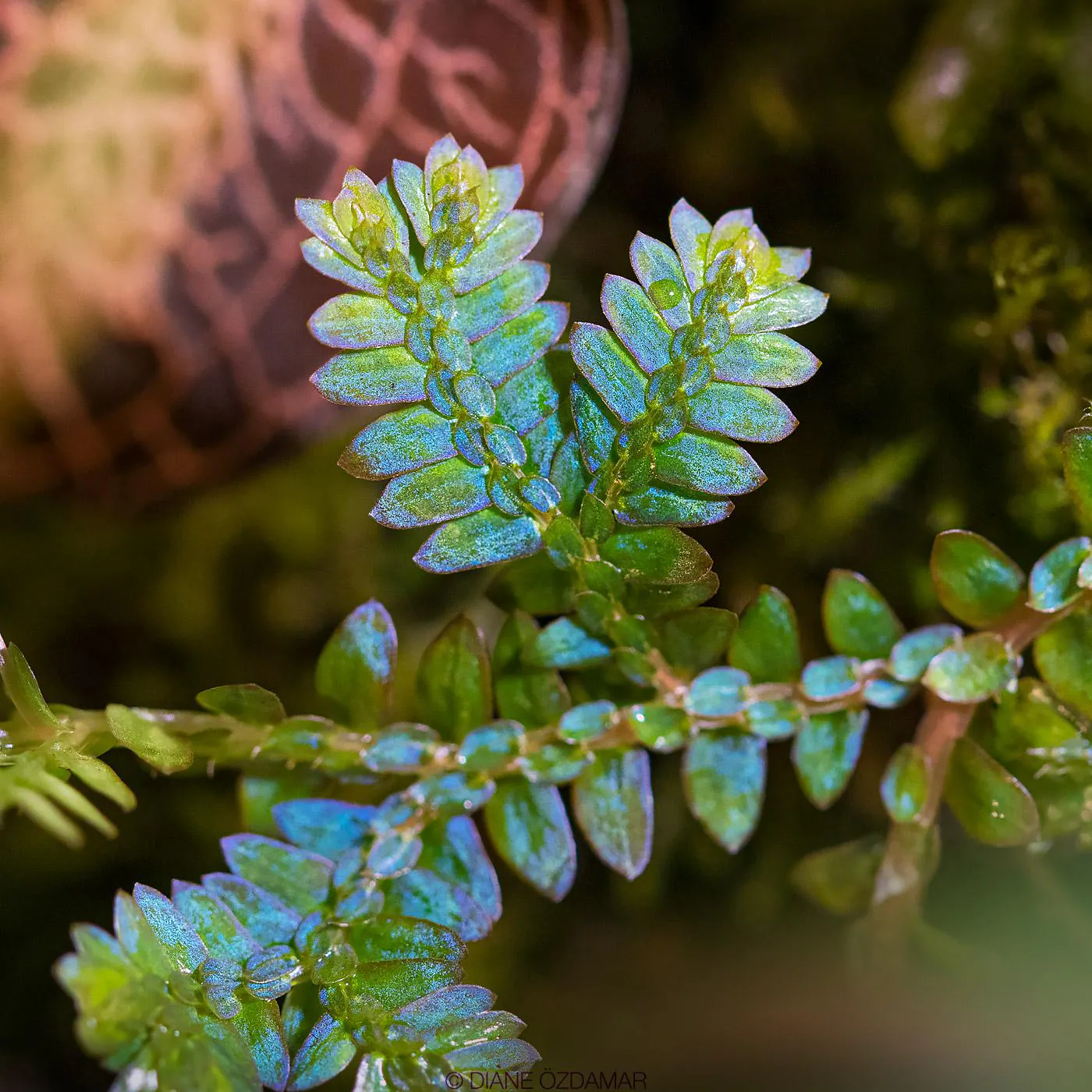
Selaginella uncinata is a creeping lycophyte (spikemoss) grown for its finely textured, fernlike foliage and distinctive metallic blue to blue‑green iridescence, a coloration produced by the structure of the leaves rather than pigment. The plant forms low, matting colonies from slender, branching stems that root where they touch the substrate, creating a dense groundcover. Like other Selaginella, it is a spore‑bearing vascular plant rather than a true fern or a flowering plant; its reproductive structures are small cone‑like strobili carried on the tips of fertile shoots. Native to southern China and neighboring parts of Southeast Asia, Selaginella uncinata is adapted to humid, sheltered habitats and is widely used as an ornamental in warm, shaded gardens, terraria, and conservatories. It performs best in bright shade or filtered light, where the characteristic sheen is often most evident, and in consistently moist, well‑drained, humus‑rich media. The plant is sensitive to drying and to cold; it is typically treated as a tender perennial, with growth slowing in cool conditions. Under suitable humidity it spreads readily, and it is most easily propagated by division or by rooting stem cuttings.
🌱 Detailed Care Guide
📐 Growth & Structure
📅 Phenology
🌍 Ecology
✨ Usage & Benefits
- ornamental
⚠️ Safety & Traits
🌱 Propagation
🧪 Soil & Nutrition
🐛 Pests & Diseases
📝 Expert Advice
Use a humus‑rich, moisture‑retentive but airy substrate that stays evenly moist yet never waterlogged. A fine fern/terrarium mix works well (e.g., peat or coir with leaf mould/compost plus perlite or fine bark for drainage). Keep the medium slightly acidic to neutral and avoid heavy, compacted soils; ensure good aeration and consistent moisture around shallow roots/rhizomes.
Selaginella uncinata is not grown from seed (it is a spore‑producing lycophyte); it is most reliably started by vegetative propagation. Planting/propagation (recommended) - Divide established mats in spring–summer: lift a clump, tease into small rooted pieces, and replant. - Alternatively, pin small stem sections onto the surface of the medium until they root. - Medium: consistently moist, fine-textured, acidic mix (e.g., peat/coco with perlite or milled sphagnum); do not let it dry out. - Planting depth: lay divisions/cuttings on the surface and press in lightly; do not bury deeply. - Environment: high humidity (terrarium/covered tray), bright shade/filtered light, warm conditions (~18–24 °C). Use soft water; avoid waterlogging but keep evenly moist. Spore sowing (possible but specialist) - If attempting spore culture, sow spores very thinly on the surface of sterile, moist peat/sphagnum medium; do not cover. - Maintain constant warmth, high humidity, and low/filtered light in a closed container; prevent contamination. - Germination and establishment can be slow and variable; divisions are far more dependable for this species.
Selaginella uncinata is a light feeder. In active growth (spring through summer), apply a balanced, complete houseplant fertilizer at 1/4–1/2 strength about every 4–6 weeks, only to already-moist potting mix. Avoid heavy feeding and high-salt fertilizers, which can scorch foliage and harm roots; if using liquid fertilizer regularly, flush the pot with plain water occasionally to reduce salt buildup. Reduce or stop fertilizing in autumn and winter, or whenever growth slows.
Apply a thin, moisture-retentive mulch (e.g., leaf mould, fine composted bark, or shredded leaf litter) to keep the root zone cool and evenly moist. Keep mulch light and airy and do not bury the creeping stems or growing tips; leave a small gap around the plant to prevent rot. Replenish as it breaks down, and avoid alkaline or salty mulches (e.g., fresh wood ash or manure-based products), which can stress this humidity-loving, woodland groundcover.
📋 Additional Information
📖 View Complete Guide
For the full interactive experience with additional photos, personalized advice, and gardening tools:
Visit Aphylia →