🌿 Lunaria annua
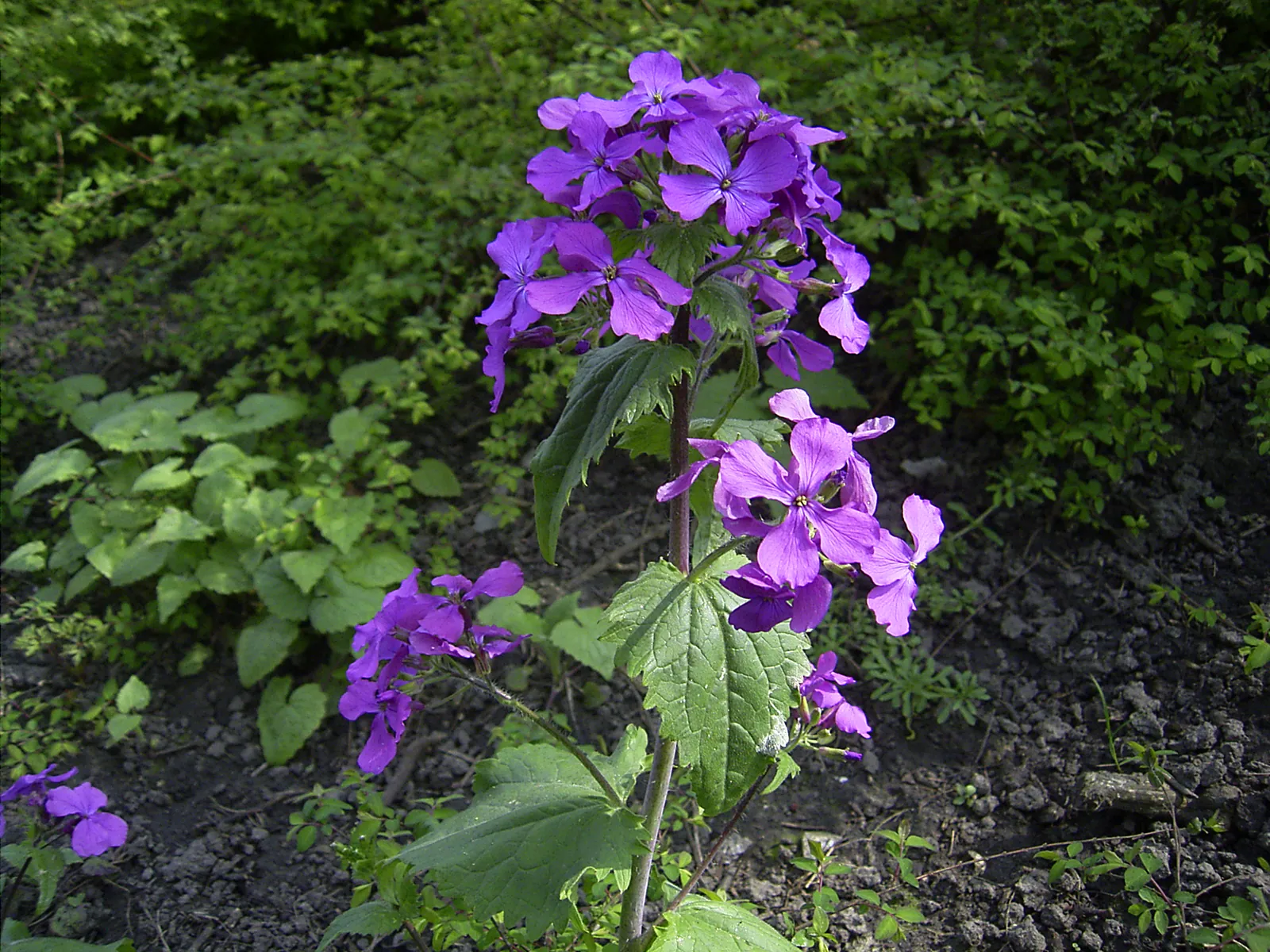
About Lunaria annua
Lunaria annua (Brassicaceae) is a short-lived herbaceous plant widely grown for its spring flowers and distinctive, papery seed pods. Despite the species epithet “annua,” it is most often biennial in cultivation, forming a basal rosette of softly hairy, heart-shaped leaves in the first season and sending up flowering stems the next. Plants typically reach about 60–90 cm tall and carry loose racemes of four-petalled flowers, most commonly violet-purple but also occurring in white forms. After flowering, flattened, oval pods (silicles) develop; when mature and dried, the outer pod walls fall away to reveal the silvery, translucent internal septum, giving the familiar “coin” effect that is prized for dried arrangements. The genus name Lunaria refers to the moonlike appearance of the seed pods. The species is native to southeastern Europe and western Asia and has been widely naturalized elsewhere, including parts of northern and western Europe and North America. In gardens it performs best in moist, well-drained, reasonably fertile soils, tolerating sun to partial shade, and it readily self-seeds, sometimes forming persistent colonies. Flowers provide nectar and pollen for a range of insects, especially bees, making it a useful early-season ornamental in informal plantings and woodland-edge borders.
🌱 Detailed Care Guide
📐 Growth & Structure
📅 Phenology
🌍 Ecology
✨ Usage & Benefits
- ornamental
- Edible parts: leaf, flower
⚠️ Safety & Traits
🌱 Propagation
🧪 Soil & Nutrition
🐛 Pests & Diseases
📝 Expert Advice
Grow in moderately fertile, humus-rich soil that is consistently moist but well drained. It tolerates a range of soil types (including chalky/alkaline) but performs best in moisture-retentive loam; avoid waterlogged or very dry, impoverished soils.
Sow as a hardy biennial for flowers and seed pods the following year. Sow seed thinly outdoors in a prepared seedbed in late spring to mid-summer (typically May–July), 3–6 mm deep, in moist, well-drained soil. Keep evenly moist; germination is usually in about 10–21 days in mild conditions. Thin or prick out seedlings when large enough to handle, and grow on in a nursery bed. Transplant to the final position in early autumn (or once sturdy) at about 30 cm spacing; water in well. Alternatively, start under cover in early spring (around March–April): sow in trays/pots of seed compost, lightly cover, keep cool to mild (about 15–20 °C) and evenly moist. Pot on as needed and harden off before planting out after risk of severe frost. Choose sun to partial shade and avoid letting young plants dry out. Allow some plants to set seed if natural self-seeding is desired.
Lunaria annua is not a heavy feeder and in average garden soil usually needs little to no additional fertilizer. Incorporate compost or well-rotted manure into the bed before sowing/planting, or top-dress with a thin layer of compost in spring. If soil is very poor, apply a light dressing of a balanced, general-purpose fertilizer in spring at label rates; avoid high-nitrogen feeds that promote lush leaves at the expense of flowering and seedpod production. In containers, use a modest slow-release balanced fertilizer at planting or a half-strength balanced liquid feed every 4–6 weeks during active growth, then stop once flowering and pod set are underway.
Apply a 2–5 cm (1–2 in) layer of organic mulch (compost, leaf mould or well-rotted bark) in spring to conserve moisture and suppress weeds. Keep mulch a few centimetres away from the crown/stems to reduce the risk of rot. In colder areas, a light winter mulch can help protect overwintering rosettes, but avoid very thick mulches if you want reliable self-seeding (leave some open soil for seedlings).
📋 Additional Information
📖 View Complete Guide
For the full interactive experience with additional photos, personalized advice, and gardening tools:
Visit Aphylia →