🌿 Sorrel
🎨 Color Palette
About Sorrel
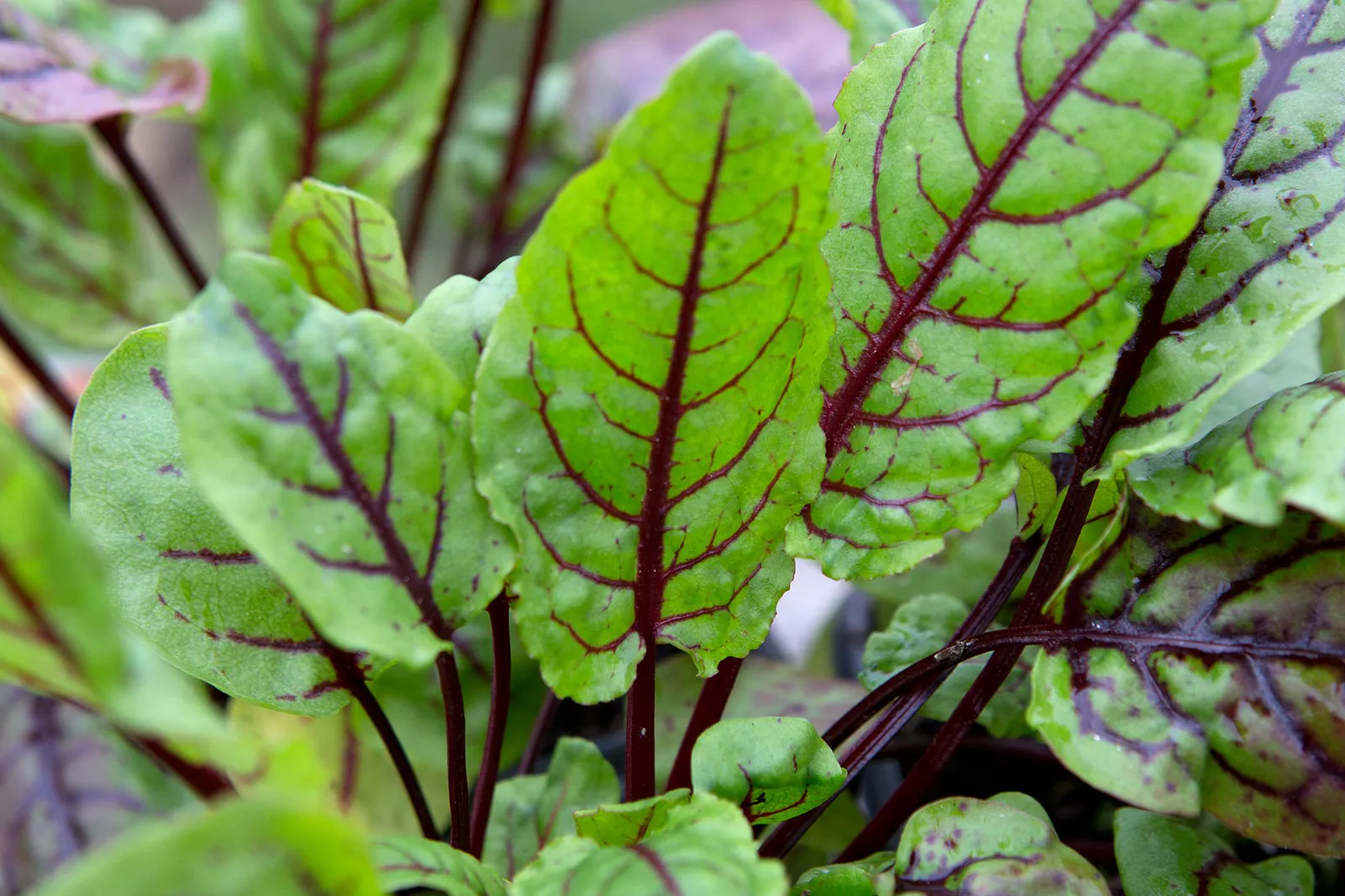
Common sorrel (Rumex acetosa) is a hardy herbaceous perennial in the buckwheat family (Polygonaceae), long cultivated and foraged in Europe and western Asia and widely naturalized elsewhere. It is grown chiefly for its fresh, sharply tart leaves, a flavor produced largely by oxalic acid. Plants form neat clumps of smooth, arrow-shaped to lanceolate green foliage from a basal crown, typically 20–40 cm tall, and in late spring to summer they send up slender flowering stems that may reach about 60 cm. The small flowers are borne in airy panicles and often show green to reddish tones; the species is commonly dioecious, with male and female flowers on separate plants. In the kitchen, young leaves are used raw in salads or cooked into soups and sauces, where their acidity brightens rich dishes; older leaves become tougher and more strongly sour. In gardens, sorrel is valued as a cool-season edible that prefers moist, fertile soil and sun to partial shade, and it can be cut repeatedly for regrowth. Flowering reduces leaf quality, so stems are often removed to prolong harvest, and the plant may self-seed if allowed to set seed. Because of its oxalate content, very large intakes are generally avoided by people prone to kidney stones.
🌱 Detailed Care Guide
📐 Growth & Structure
📅 Phenology
🌍 Ecology
✨ Usage & Benefits
- edible
- medicinal
- infusion
- Edible parts: leaf, stem
⚠️ Safety & Traits
🌱 Propagation
🧪 Soil & Nutrition
🐛 Pests & Diseases
📝 Expert Advice
Grow sorrel in cool, humus-rich, moisture-retentive but well-drained soil (loam or sandy loam amended with compost/leaf mould or well-rotted manure). It tolerates a range of soils but performs best in slightly acidic to neutral conditions (about pH 6.0–7.0). Avoid waterlogged, compacted sites; improve drainage/aeration with organic matter and, if needed, raised beds. Keep soil evenly moist during active growth—mulch helps conserve moisture and moderate soil temperature; drought and heat stress can increase bitterness and promote bolting.
Sorrel (Rumex acetosa) is a hardy perennial grown for its tangy leaves. Sow in fertile, moisture-retentive, well-drained soil in full sun or partial shade. Under cover: Sow late winter to early spring (about February–April) in trays or pots of seed compost. Sow thinly and cover lightly (about 5 mm) with compost or vermiculite. Keep evenly moist; germination is usually in 7–14 days at cool room temperatures. Prick out or pot on when seedlings are large enough to handle. Harden off and plant out once established and when the risk of severe frost has passed. Direct sowing: Sow outdoors from spring to late summer (about March–August) into prepared, weed-free ground. Sow thinly in drills about 5 mm deep; keep the seedbed consistently moist. Thin seedlings to final spacings of about 20–30 cm between plants (and 30–45 cm between rows) to allow for clump formation. Aftercare/establishment: Water during dry spells until plants are established; mulch to conserve moisture. For best leaf production, remove flower stems as they appear. Alternative propagation: Divide established clumps in spring or autumn to rejuvenate plants and to increase stock.
Sorrel grows best in moderately fertile, moisture-retentive soil and usually needs only light feeding. At planting, incorporate compost or well-rotted manure. Each spring, top-dress with 2–5 cm (1–2 in) of compost (or a light application of a balanced organic fertilizer) and water in. If plants are pale or growth is slow, apply a nitrogen-leaning liquid feed during active growth, about every 2–4 weeks in spring; continue in summer only if plants are being harvested frequently and kept evenly watered. Avoid heavy or late-season nitrogen applications, which can produce soft, weak growth and reduce winter hardiness. In containers, use a diluted balanced liquid fertilizer every 3–4 weeks during spring/early summer, then reduce or stop as growth slows.
Mulch with a 2–5 cm layer of compost, well-rotted manure, or leaf mold to conserve moisture, suppress weeds, and keep roots cool. Refresh in spring and after heavy harvesting; in hot, dry weather maintain an even mulch layer to reduce heat stress. Keep mulch a few centimetres away from the crown/leaf bases to improve airflow and reduce risk of rot or slug problems, and avoid very thick mulch in cool, wet conditions.
Sorrel (Rumex acetosa) has a history of traditional use as an antiscorbutic (vitamin C–rich spring herb), a mild diuretic and laxative, and as a cooling, astringent herb. Preparations of the leaves have been used to support digestion and appetite and for minor febrile or inflammatory complaints; crushed leaves have also been applied topically in folk practice for minor skin irritations. Sorrel is high in oxalic acid, so frequent/large medicinal use is generally avoided in people prone to kidney stones or with renal disorders.
Sorrel (Rumex acetosa) leaves can be used to make a light, tart herbal infusion that is traditionally taken as a “cooling” drink and mild digestive support; it has also been used historically as a spring tonic and antiscorbutic (vitamin‑C–containing) herb. Keep infusions mild (briefly steep a small amount of fresh or dried leaf in hot, not vigorously boiling, water) and use occasionally. Avoid regular/high‑dose use because sorrel is high in oxalic acid/oxalates; avoid if you have kidney disease or a history of calcium‑oxalate kidney stones, and use caution during pregnancy and for children.
📋 Additional Information
📖 View Complete Guide
For the full interactive experience with additional photos, personalized advice, and gardening tools:
Visit Aphylia →