🧗 Passionflower
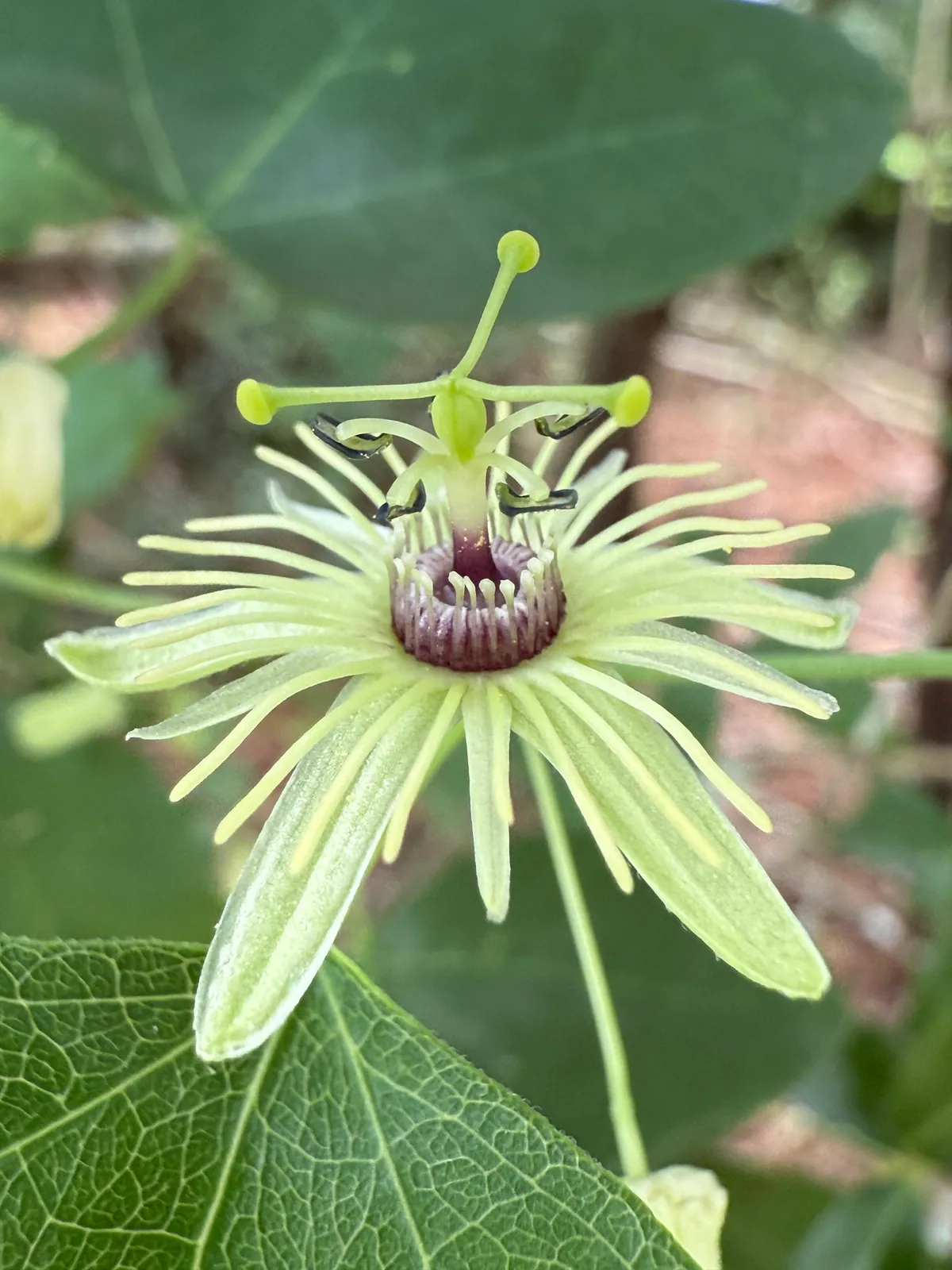
About Passionflower
Passionflower (Passiflora caerulea), commonly called blue passionflower, is a vigorous, tendril-climbing perennial vine grown for its distinctive, complex blooms and lush foliage. Native to parts of South America, it is widely cultivated as an ornamental climber on walls, fences, pergolas, and trellises, where its twining stems can rapidly cover supports. The plant bears deeply lobed, palmately divided leaves and produces striking flowers typically 7–10 cm across, with white to pale petals surrounding a prominent corona of blue and purple filaments, and a central column of stamens and stigmas. Flowering is most abundant in warm, bright conditions, and blooms are visited by a range of insect pollinators; in favorable climates, pollination may be followed by egg-shaped orange-yellow fruits. The fruits are generally considered edible when fully ripe, though they are less prized than those of some other Passiflora species. In cultivation, blue passionflower performs best in well-drained soil with regular moisture during the growing season and a sheltered position in full sun to partial shade. It is relatively tolerant of cool conditions compared with many passionflowers, and in mild regions it can remain evergreen; where winters are colder, top growth may be damaged but plants often reshoot from the base. Pruning in late winter or early spring helps control size and encourages strong new flowering growth.
🌱 Detailed Care Guide
📐 Growth & Structure
📅 Phenology
🌍 Ecology
✨ Usage & Benefits
- edible
- ornamental
- medicinal
- infusion
- fragrant
- Edible parts: fruit, seed
⚠️ Safety & Traits
🌱 Propagation
🧪 Soil & Nutrition
🐛 Pests & Diseases
📝 Expert Advice
Plant in humus-rich, fertile soil that stays evenly moist but drains freely. Amend ground with plenty of well-rotted organic matter to improve moisture retention, and add grit/sharp sand or perlite where soils are heavy to prevent waterlogging. For containers, use a loam-based, organic-rich potting mix with added perlite/grit for airiness and drainage. Best in slightly acidic to neutral pH; avoid persistently soggy sites.
Sow fresh seed indoors in late winter to spring for best results. Pre-treat by lightly scarifying (nicking or rubbing) the hard seed coat, then soak in warm water for 12–24 hours (change water if it cools). Sow into a sterile, free-draining seed compost (e.g., seed mix with added perlite) at about 5–10 mm deep; firm gently and label. Maintain consistently warm conditions (ideally 20–25°C, bottom heat helpful) and even moisture—keep the medium damp but not waterlogged; cover with a propagator lid/bag and ventilate to reduce damping-off. Germination is often slow and irregular, commonly taking several weeks and sometimes a few months, especially with older seed. Once seedlings have true leaves and are large enough to handle, prick out into individual pots and grow on warm and bright. Pot on as roots fill the container. Harden off gradually and transplant outside only after all frost risk has passed and plants are well rooted; provide support for climbing. For more reliable and quicker propagation, take semi-ripe cuttings in summer (2–3 nodes, remove lower leaves, place in a free-draining mix under humid conditions) and overwinter young plants frost-free where needed.
Feed passionflower during active growth (spring through late summer). In the ground, top-dress in spring with compost or well-rotted manure and, if needed, apply a balanced slow-release granular fertilizer; avoid placing fresh manure against stems/roots. For container plants, use a controlled-release fertilizer at the start of the season and supplement with a liquid feed every 2–4 weeks. To encourage flowering and fruiting, favor fertilizers with higher potassium (and adequate phosphorus) and avoid excess nitrogen, which promotes leafy growth at the expense of flowers. Reduce or stop feeding in autumn and winter when growth slows.
Apply a 5–8 cm (2–3 in) layer of organic mulch (e.g., composted bark, leaf mold, or well‑rotted compost) over the root zone to conserve moisture and moderate soil temperature. Keep mulch a few centimeters away from the main stem/crown to reduce the risk of rot. Replenish as it breaks down and after heavy rain. In regions with cool winters, increase to about 8–10 cm (3–4 in) in late autumn to help insulate roots; pull it slightly back in spring as growth resumes to keep the crown dry.
Provide a strong, permanent support such as a trellis, pergola/arbor, chain-link fence, or tensioned wires (a few horizontal wires spaced up a wall or fence work well). Passionflower climbs by tendrils, but young plants need training: gently fan out and guide new shoots onto the support and tie in loosely with soft garden ties/twine, leaving slack for stem thickening. Keep the main stems attached until tendrils have secured; then remove or loosen ties as needed. Allow generous space for vigorous growth and check/replace ties at least yearly to prevent girdling or abrasion.
Passionflower (commonly Passiflora incarnata) is used in herbal medicine as a mild sedative and anxiolytic. Preparations of the aerial parts have been traditionally used to help relieve mild symptoms of mental stress (nervousness/restlessness) and to aid sleep. Clinical evidence is limited but suggests possible short-term benefits for anxiety and sleep quality; it is not a substitute for treatment of diagnosed anxiety disorders or insomnia.
Passionflower (Passiflora incarnata) infusion made from the dried aerial parts is traditionally used as a mild sedative and anxiolytic to help relieve nervous restlessness, tension, and mild symptoms of mental stress, and to support sleep (e.g., difficulty falling asleep or mild sleep disturbances). Herbal references also describe a gentle antispasmodic/relaxant effect, so it may be used in traditional practice for stress-related somatic symptoms (such as “nervous” discomfort). Evidence for clinical benefit is limited, but these uses are recognized in traditional herbal monographs for short-term use.
Prune in late winter to early spring (after the risk of severe frost): remove any frost-damaged, dead, diseased, or weak stems, then shorten long, whippy shoots and cut back side shoots to a framework to control size and stimulate new flowering growth. Tie in selected strong stems to supports as needed. After flowering, lightly trim or shorten spent flowering shoots to keep the plant tidy, but avoid heavy pruning late in the season as it can reduce flowering and expose tender growth to cold. If renovation is required, older congested plants can be cut back harder to a low framework, but avoid cutting into completely bare, old wood where possible and expect reduced flowering until regrowth establishes.
📋 Additional Information
📖 View Complete Guide
For the full interactive experience with additional photos, personalized advice, and gardening tools:
Visit Aphylia →