🌿 Canna
About Canna
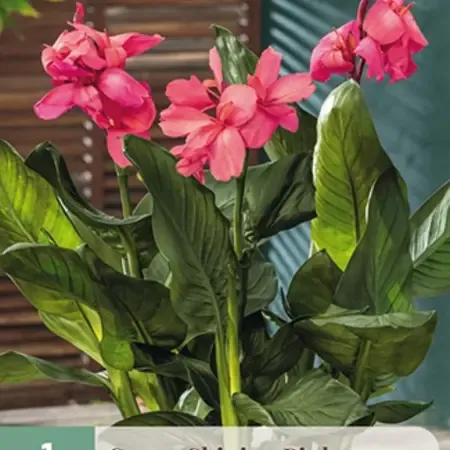
Canna ‘Shining Pink’ is a cultivated canna (Canna, often called canna lily) grown for its bold, tropical-looking foliage and showy pink flowers. Like other cannas described in major horticultural references, it is a rhizomatous, herbaceous perennial that forms upright clumps of large, paddle-shaped leaves and sends up strong flowering stems during warm weather. The flowers are produced in terminal clusters; what appear to be petals are largely showy staminodes, giving cannas their distinctive, ruffled display. This cultivar performs best in full sun, where flowering is most abundant, though it can tolerate light shade. Cannas generally prefer fertile, humus-rich soil and consistent moisture through the growing season, making them especially useful in beds and borders that are regularly watered and in large containers. In cooler climates they are treated as tender perennials: plants are grown outdoors after frost danger has passed, then the rhizomes are lifted and stored frost-free, or containers are moved under cover, to overwinter. In frost-free regions they can remain in the ground and may gradually expand into broader clumps. ‘Shining Pink’ is typically used as a dramatic summer accent, pairing well with other heat-loving ornamentals and adding height, structure, and vivid color to mixed plantings.
🌱 Detailed Care Guide
📐 Growth & Structure
📅 Phenology
🌍 Ecology
✨ Usage & Benefits
- ornamental
- Edible parts: rhizome
⚠️ Safety & Traits
🌱 Propagation
🧪 Soil & Nutrition
🐛 Pests & Diseases
📝 Expert Advice
Grow in deep, fertile, humus-rich soil that holds moisture yet drains well. Incorporate compost or well-rotted manure to improve structure and nutrient availability. Avoid waterlogged sites (especially in cool weather), but do not let soil dry out during active growth; consistently moist soil is ideal. Best performance is typically in slightly acidic to neutral soils.
Propagation is usually by rhizome division rather than seed for named cannas. From rhizomes (recommended): - Timing: Start under cover in late winter to early spring, or plant outdoors after the last frost when soil has warmed. - Pre-sprouting: Pot rhizomes in moist (not wet) multipurpose compost; keep warm and bright (about 18–21°C) to encourage shoots. - Planting depth: Set rhizomes horizontally with the growing points just below the surface (about 5–10 cm deep). - Planting out: Harden off and transplant after frost risk has passed. - Spacing: About 30–60 cm apart (allow more for tall/vigorous types). - Site: Full sun for best flowering; fertile, moisture-retentive but well-drained soil. - Water/feed: Water regularly through summer; apply a balanced feed during active growth. From seed (possible but offspring may not come true to type): - Seed preparation: Seeds have a very hard coat; scarify (nick the seed coat) and soak in warm water for 12–24 hours. - Sowing: Sow late winter to spring in a seed compost, about 1–2 cm deep. - Germination conditions: Warmth is essential (around 21–25°C); keep evenly moist. - Potting on: Prick out and pot on once large enough to handle; grow on warm and bright. - Planting out: Harden off and plant outside only after all frost risk has passed. Overwintering (cool climates): - After first frost blackens foliage, lift rhizomes, dry briefly, and store frost-free, cool and dry; replant in spring.
Cannas are heavy feeders. Incorporate compost or well-rotted manure before planting, and at planting apply a balanced, slow-release fertilizer (e.g., equal N-P-K). During active growth and flowering, feed every 4–6 weeks with a balanced or slightly higher-potassium fertilizer; water well after feeding. Avoid excessive nitrogen (it can promote lush leaves at the expense of blooms). Stop fertilizing in late summer/early fall as growth slows, and do not feed dormant rhizomes over winter.
Apply a 5–8 cm (2–3 in) layer of organic mulch (compost, shredded bark, leaf mold) after the soil has warmed in spring to conserve moisture, suppress weeds, and keep roots cool. Keep mulch a few centimeters away from the stems/rhizome crown to reduce rot. In colder regions, after the first frost cuts back foliage, add a thicker insulating mulch layer (about 10–15 cm / 4–6 in) to protect rhizomes if they are left in the ground; remove or thin in spring as growth resumes.
Most cannas are self-supporting in sheltered sites, but tall stems can topple in wind or rain. If plants reach 90–150 cm or are in exposed positions, install stakes early (when shoots are 20–30 cm) to avoid damaging rhizomes later. Use bamboo canes or sturdy garden stakes placed a few cm from the clump; tie stems loosely with soft ties (cloth, rubber, or horticultural twine) in a figure‑8, adding additional ties as the stems elongate. For clumps, a circular grow‑through support or a few stakes with string around the perimeter works well. Keep ties below the flower heads and check/loosen periodically to prevent girdling.
Remove spent flower heads promptly (deadhead) by cutting the flowered stem back to the next bud/leaf junction to encourage continued blooming and keep plants tidy. As each flowering stem finishes, cut that stalk down to the base if no further buds remain. During the growing season, remove yellowing, damaged, or diseased leaves at the base to improve airflow; use clean, sharp tools. After the first hard frost (or when foliage naturally dies back), cut all stems and leaves to about 5–10 cm (2–4 in) above soil level. In frost-free climates, cut back old, tattered foliage and remove dead stems at ground level as needed. When lifting/dividing, trim foliage back to 10–15 cm (4–6 in) and discard any soft, rotting, or damaged rhizome pieces.
📋 Additional Information
📖 View Complete Guide
For the full interactive experience with additional photos, personalized advice, and gardening tools:
Visit Aphylia →