🌲 Rhododendron tomentosum
About Rhododendron tomentosum
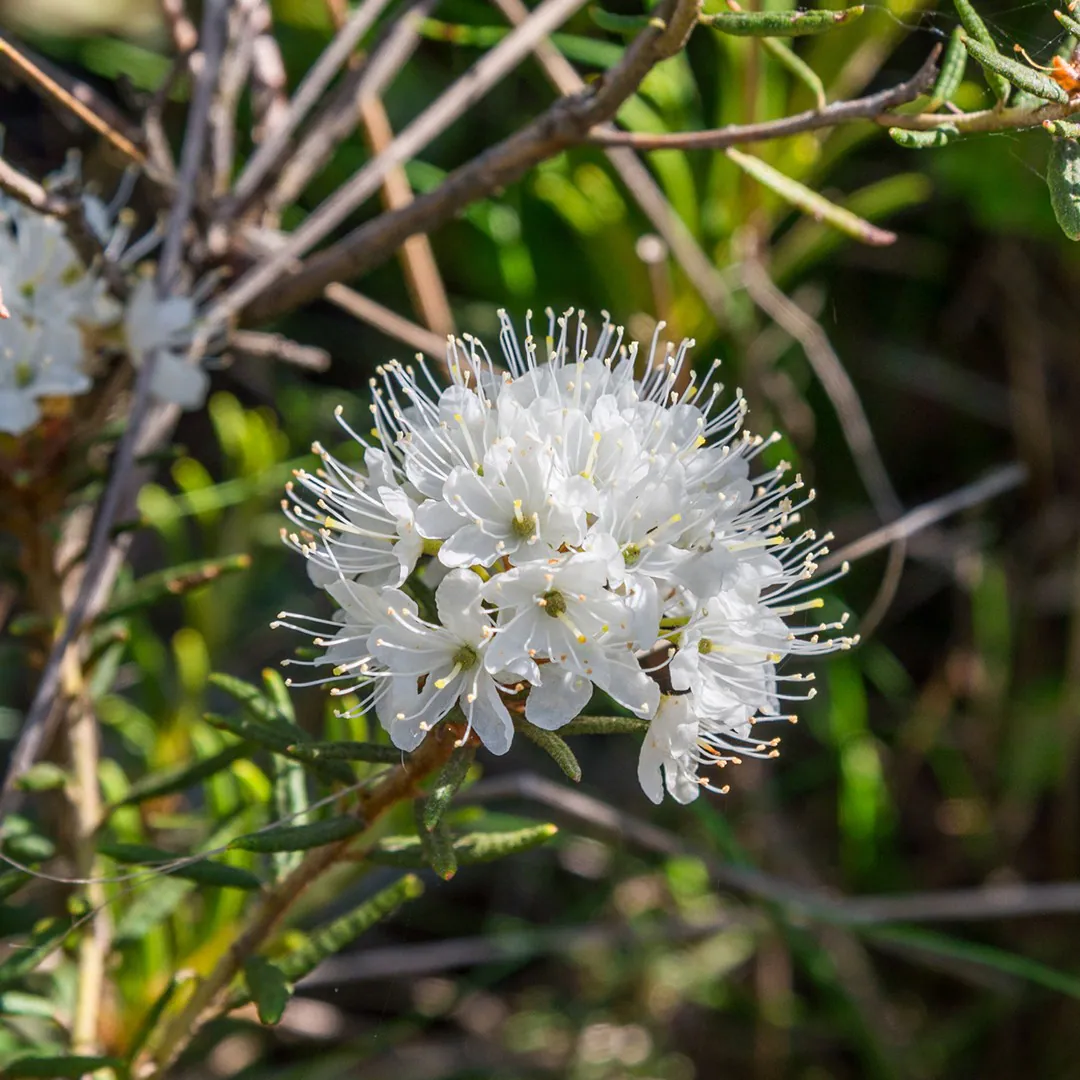
Rhododendron tomentosum is an aromatic, evergreen shrub of cool northern regions, long known under the synonym Ledum palustre and often called marsh Labrador tea or wild rosemary. It is native across the boreal and subarctic zones of Europe, Asia, and North America, where it typically grows in acidic, nutrient-poor habitats such as peat bogs, wet heaths, muskeg, and open coniferous woodland. Plants are usually low and spreading, with narrow, leathery leaves that are dark green above and densely felted with rusty-brown hairs beneath; the foliage is strongly resinous-scented when crushed. In late spring to early summer it bears clusters of small white flowers with prominent stamens, which can be attractive to insects but may contribute to the shrub’s strong, distinctive presence in bog communities. The species is adapted to cold climates and waterlogged, acidic soils, and it is often associated with sphagnum moss and other ericaceous plants. Leaves have been used traditionally to prepare herbal infusions, but the plant contains toxic compounds (including grayanotoxins), and ingestion can cause poisoning in humans and livestock; it should therefore not be used as a food or tea substitute. In cultivation it is primarily of interest for naturalistic, acidic gardens and wetland plantings where its fragrance and evergreen texture can be appreciated safely.
🌱 Detailed Care Guide
📐 Growth & Structure
📅 Phenology
🌍 Ecology
✨ Usage & Benefits
- ornamental
- aromatic
- medicinal
- infusion
- fragrant
- Edible parts: leaf
⚠️ Safety & Traits
🌱 Propagation
🧪 Soil & Nutrition
🐛 Pests & Diseases
📝 Expert Advice
Best in acidic, humus-rich, peaty soils that stay consistently moist to wet (bog/peatland type), but are still airy (avoid compacted substrates). Tolerates nutrient-poor, sandy-peat mixes; does poorly in dry soils. Avoid lime and alkaline conditions; use ericaceous compost/leaf mould/peat-free acidic mixes and mulch with acidic organic matter to keep the root zone cool and moisture-retentive.
Seed propagation is possible but slow; plants are more commonly increased by semi-ripe cuttings or layering. If sowing seed, use fresh seed where possible. Seed sowing (under cover): - Timing: late winter to spring after a cold period, or sow in autumn and allow natural winter chilling. - Pretreatment: cold stratify in the fridge (moist, not wet) for about 6–12 weeks to improve germination. - Medium: fine, free-draining but moisture-retentive, acidic compost (ericaceous seed compost or a mix such as milled sphagnum peat/peat substitute with sharp sand/perlite). Use clean pots/trays. - Sowing: seed is very small—sow thinly on the surface and do not cover (or only the lightest dusting of fine sand/vermiculite). Light aids germination. - Conditions: bright light (no strong midday sun), 15–20°C, consistently moist. Maintain high humidity with a propagator or cover, but ventilate regularly to reduce damping-off. - Aftercare: germination can be slow and uneven. Prick out carefully once seedlings are large enough to handle and pot into small containers of ericaceous compost. Grow on cool, frost-protected for the first winter; harden off gradually. Planting out: - Site: acidic (lime-free), humus-rich soil; best in moist to wet conditions similar to bog/heathland. Full sun in cool climates; partial shade where summers are warm. - Planting: set at the same depth as in the pot; water in well. Mulch with acidic organic matter (pine needles, leaf mould) to conserve moisture. - Care: keep evenly moist (do not allow to dry out). Avoid lime and alkaline fertilisers; use only ericaceous feeds if needed.
Rhododendron tomentosum is adapted to acidic, nutrient-poor soils and usually needs little to no fertilizer. If growth is weak or foliage is pale, apply a light dose of an acid-forming, slow-release fertilizer labeled for rhododendrons/azaleas in early spring as new growth begins, following the product’s lowest recommended rate. Avoid fertilizing after mid-summer to prevent tender late growth and winter injury. Do not use lime or alkaline/“garden lime” products, and avoid high-nitrogen feeds or fresh manure. Maintain fertility and moisture with an acidic organic mulch (e.g., pine needles, bark) rather than heavy feeding.
Apply a 5–8 cm (2–3 in) layer of acidic organic mulch (pine needles, shredded pine bark, leaf mould, or other ericaceous/conifer compost) over the root zone to conserve moisture, keep roots cool, and help maintain low pH. Keep mulch a few centimetres away from the stem to prevent rot. Avoid limed products, alkaline mulches, or fresh manure; top up annually as it breaks down.
Traditionally used (often as an infusion of the leaves, sometimes called Labrador tea or wild rosemary) for symptomatic relief of colds, coughs, sore throat and mild respiratory complaints, and externally as a rub/wash for rheumatic or muscular pains and skin irritation. Use requires caution: the leaves contain essential oils (e.g., ledol) that can be toxic in excess; internal use is not widely recommended without professional guidance.
Leaf infusion (“Labrador tea”) has a documented history of traditional use as a warming drink for relief of cold- and flu-like symptoms (fever, cough, sore throat/chest congestion) and as a mild diaphoretic and diuretic. It has also been used for mild digestive upset. The leaves contain aromatic essential oils and phenolic compounds associated with antimicrobial, antioxidant and anti-inflammatory activity in laboratory studies. Use with caution: strong or frequent infusions can cause adverse effects (e.g., nausea, dizziness) due to potent terpenoids; avoid in pregnancy and do not use large doses.
Prune sparingly; this shrub naturally forms a low, open mound and does not require regular cutting. In late spring to early summer, immediately after flowering, remove spent flower clusters and lightly tip‑prune to shape if needed (next year’s flower buds form on current season’s growth, so avoid late‑season pruning). At any time, cut out dead, damaged, or diseased shoots back to healthy wood. For rejuvenation of an overgrown plant, thin a portion of the oldest stems by cutting them at the base, spreading the work over 2–3 years rather than hard‑pruning all at once. Avoid heavy pruning into old, leafless wood and avoid autumn pruning, which can reduce winter hardiness.
📋 Additional Information
📖 View Complete Guide
For the full interactive experience with additional photos, personalized advice, and gardening tools:
Visit Aphylia →